

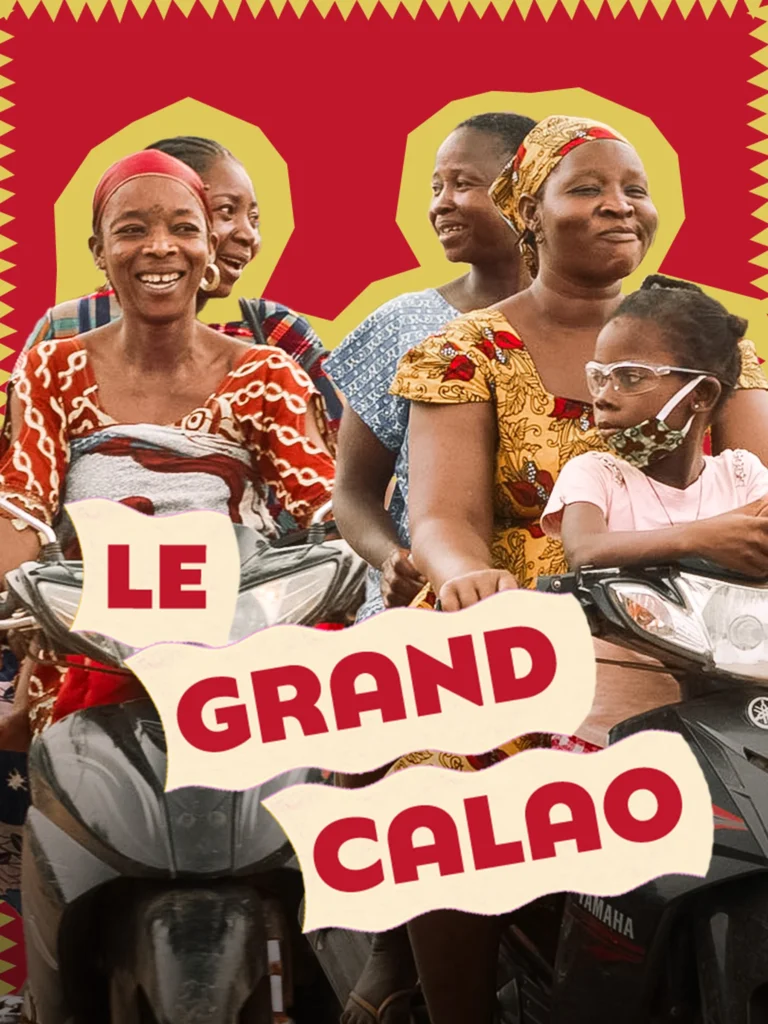
For the women of Le Grand Calao, a day at the swimming pool is a dip in a refreshed sense of womanhood. Zoé Cauwet’s new short film, which premiered at the New York African Film Festival, zooms into a Burkinabe women’s association who cool off on a hot day at the titular resort in Ouagadougou. Its 27-minute stretch of serene, restful contemplation interrupts the rambunctiousness of a typical African city, known for disconcerting car horns and the clamour of road vendors. That a city’s noise only adds to the many other burdens of a working-class woman and mother is why the film opens with the six women at their point of escape. Arriving at the home of Aïcha, who presents as the group’s lead, they pore over each other’s outfits and hop on their motorcycles.
At Le Grand Calao resort, tranquility washes over the film. Roaring motorcycles give way to rustling trees, and our women — who initially disrupt the calm with their excitement — succumb to quietude. To capture simple joys, Victor Zebo’s cinematography is careful to not assert itself. A bee enjoying a swim, a waiter walking, a couple flirting by the deck: situational shots that slow the rhythm.
What stands out is the women’s commitment to pleasure above all else. Abi, a mother of two children, is eager to learn to swim. “Abi! You’re going to end up looking like a toad,” the others joke. Aïcha, whom they call Auntie Choco, urges the others to drink and eat to their heart’s content, to spend money without worry. Pauline has come to escape her troubling home with an abusive husband. And they are all mothers, to toddlers and school-aged kids. When a life guard cautions Abi to change into appropriate swimming gear, the women shut him down. Their merriment will not be policed.
Soon, some of the women are asleep under a mango tree, others sprawled on lounge chairs; some play card games; and Abi remains in the pool. “When the sun goes down, I feel worried and scared,” one woman says in the passing silence, opening a vulnerable moment. “Eat up!” another lady chimes in, to douse the thought before it pollutes their peace.
Their cocoon of solitude is briefly interrupted, a reminder that, beyond the walls of the resort, there is political unrest in the city. (The women are meeting in March 2022, two months after President Roch Marc Christian Kaboré was ousted by Lieutenant Colonel Paul-Henri Sandaogo Damiba.) Within the walls, too, a different politics is at play: the resort is both a safe haven for expatriates who saunter about with their police security, as well as momentary refuge for ordinary Burkinabe citizens like the women. “You know, women have lots of troubles,” Abi tells a curious guest, explaining the purpose of their association.
Le Grand Calao eases them into brief bliss, into leisurely self-care that many African women, trapped in the hustle of city life and domestic duties, are not privileged to enjoy. “It’s not even over yet and I miss it,” Aïcha announces a quarter way into the film, savoring the last bite of her lunch. The final frames linger on the aftermath of their presence: the empty bottles on tables, forgotten items, wet footprints, and empty chairs dented by their sitters. ♦
If you love what you just read, consider making a PayPal donation to enable us to publish more like it.
More Film & TV Reviews from Open Country Mag
— A Night in 2005, Reviewed: A Brilliant Revenge & Social Thriller
— Roses and Ivy, Reviewed: Sisters Asunder
— A Green Fever, Reviewed: Mystery Man in the House
— With Difficulty Comes Ease, Reviewed: The Hard Life of a Muslim Igbo Widow
— Funmilayo Ransome-Kuti, Reviewed: Uneven Dues for a Legend
— House of Ga’a, Reviewed: The Fall of an Oyo Empire Kingmaker
— Afamefuna: An Nwa Boi Story, Reviewed: A Winning Depiction of the Igbo Apprenticeship System
— Breath of Life, Reviewed: Faith, Redemption, & Male Friendship
— Ebrohimie Road, Reviewed: A Literary Legend as Father & Husband
— A Tribe Called Judah, Reviewed: A Box Office-Breaking Heist of Authenticity & Heart
— Jagun Jagun, Reviewed: New Heights for the Nollywood Historical Epic
— The Real Housewives of Lagos, Recapped & Reviewed: Glamour & Drama in Las Gidi