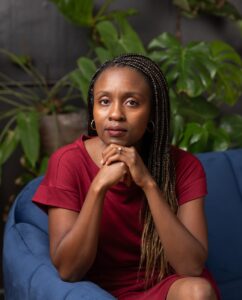
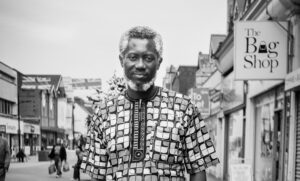
The Nigerian poet did not necessarily plan for his first full-length collection, The Years of Blood, to confront his boyhood in a stark way. But the layers of memory and spirituality it unpeels go back to the Yoruba verses of his direct ancestors.
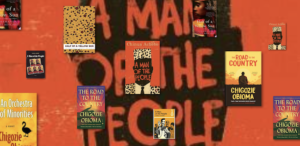
Reading Chigozie Obioma, Biafra, and Igbo cosmology, a philosopher reflects on “the shrunken role of Nigerian writers today” and their “inability to perceive the shifting of the tectonic plates.” Arguing that the Achebean tradition has created novelists who “wish to be free of the responsibility of the oracle but ache to inherit that reverence,” it is a decrial of the metaphysical gap in our realist fiction, and a rallying cry for mythos and “oracular insight.”
Founded by Chukwuka Odigbo and Dawn Chinagorom-Abiakalam, and judged by Adachioma Ezeano and Esther Ifesinachi Okonkwo, the ₦2.95 million ($2,165) Sabi Prize for Critical Reading and Writing “hopes to inspire young Nigerians everywhere.” Open Country Mag has published the winning essays.
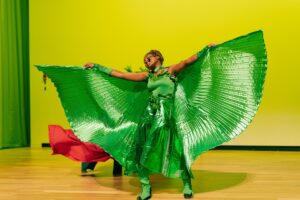
A month after her production Pretty Dangerous: Four Acts on Womanhood wrapped in Canada, the Nigerian artist took home African poetry’s top honour. Her practice is “a way of holding those in-betweens,” she said.
The Gbagyi are an ethnic minority in Nigeria’s vastly diverse Northern Central region, with scant representation in mainstream arts and literature. With Before the Mango Ripens, a historical novel set during a 1970s Christian tussle, an emigrant daughter shares an untold chapter.
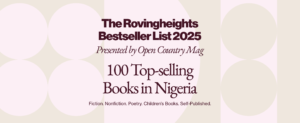
Releasing the fourth annual compilation of the only bestseller list in Nigerian literature: comprising the Top 100 books of the year, alongside the Top 50 in fiction, nonfiction, poetry, self-published, and children’s books.
Longform Profiles on Wole Soyinka and curator Chude Jideonwo, a feature on South African poetry, an essay on an Oscar-winning film, interviews with indie filmmakers, and more: the defining stories of our fifth year.
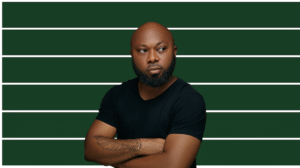
To tell their stories, the author of Yahoo! Yahoo! imitates his characters. If he writes about scammers, he wants readers to suspect him of scamming. Why should Nigerian literature not be as relatable as its music? And why, as director of the Puebla International Literature Festival, should he not want writers to take an ethical stand?
For decades, Nigerians looked to writers for moral authority. As the country deteriorates further, and more writers become “hooker intellectuals,” the short story writer, attorney, and digital publishing pioneer hopes to maintain his courage.
In Nnamdi Azikiwe University, Awka, writers are gathering to converse and perform at Eagle Nest Book Club. “It is likely we have created something that will outstay us in this place,” said the founders.
In Umoren’s Impostor Alert!, two women meet on a bus heading for Lagos. In Hussain’s forthcoming Truth is a Flightless Bird, two halves of Nairobi fight for superiority.
Iduma revealed their relationship in a beautiful letter on Instagram: “I should begin with how long I’ve loved you, to what extent, and with what intensity.”
“It’s amazing that any government would put writers like me on a list of enemies of the Nigerian state,” he says. “A writer who calls out corruption could not be an enemy of the state.”
“An ambitious new magazine committed to African literature”
— Chimamanda Ngozi Adichie
Join 25,000+ subscribers to essential, in-depth stories in African literature, Nigerian film, & culture: inspiring Profiles, incisive reviews, thought-provoking features & conversations that happen nowhere else. It's premium access to the visions of changemakers, from icons to emerging voices. Plus key industry stories from Folio Nigeria by CNN.
We respect your privacy and will never send you Spam or sell your email.