
18 September 2026, London: Nobel laureates Olga Tokarczuk and J.M. Coetzee, alongside leading international writers including Burhan Sonmez, President of PEN International, Jennifer Clement and John Ralston Saul, former Presidents of PEN International, Isabel Allende, Ben Okri, Yann Martel, Rohinton Mistry, Anthony Doerr, Colm Tóibín, Tsitsi Dangarembga, Kamila Shamsie, Ahdaf Soueif, Dacia Maraini, and others, have signed a PEN International open letter to Eritrean President Isaias Afwerki, in support of PEN International’s global Proof of Life campaign.
The letter calls for immediate, verified proof of life for 12 Eritrean writers and journalists who were arrested and disappeared in 2001, and for an end to 25 years of silence surrounding their fate.
“Twenty-five years is an unbearable length of time for any family to live without knowing whether a loved one is alive,” said Burhan Sonmez, President of PEN International. “These writers have not disappeared from our memory. We will continue to speak their names, and we will continue to demand the truth about what happened to them.”
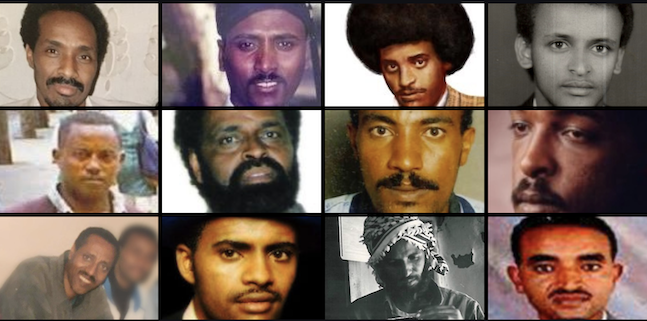
The 12 writers and journalists are Amanuel Asrat, Dawit Habtemichael, Dawit Isaak, Fessehaye ‘Joshua’ Yohannes, Matheos Habteab, Medhanie Haile, Sahle ‘Wedi-ltay’ Tsegazeab, Said Abdelkadir, Said Idris ‘Abu Are’, Seyoum Tsehaye, Temesgen Ghebreyesus and Yousif Mohammed Ali.
For a quarter of a century, their families and colleagues have received no verified information about their whereabouts, health or survival. The writers have been held incommunicado without trial or contact with their families. PEN International has consistently campaigned for their freedom and for information about their fate.
The letter calls on the Eritrean authorities to “Provide immediate, verified proof of life for all arbitrarily detained Eritrean writers and critics.”
The 12 Writers
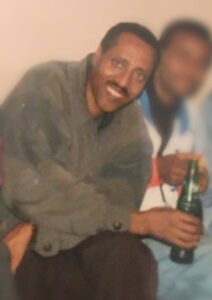
Sahle-Wedi-Itay-Tsegazeab (Journalist)
Sahle-Wedi-Itay-Tsegazeab was a writer and freelance journalist who worked for the privately owned newspaper Keste Debena as well as the pro-government daily Hadas Eritrea.
He was arrested in October 2001 in relation to his journalistic work.
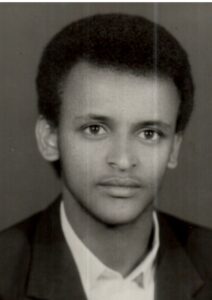
Said Abdelkadir (Journalist)
Said Abdelkadir was the editor-in-chief of the Admas newspaper at the time of his arbitrary arrest and imprisonment in September 2001.
His whereabouts and state of health remain unknown, as Eritrean authorities have ignored repeated requests for disclosure.
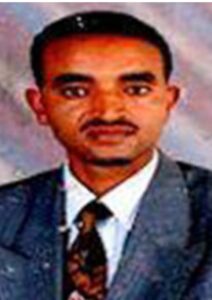
Medhanie Haile (Writer, Journalist, and Translator)
Medhanie Haile was the deputy editor of the Keste-Demena Newspaper. At the time of his arbitrary arrest in September 2001, he was a lawyer working for the Eritrean Ministry of Justice.
He wrote articles calling for the establishment of the rule of law in an independent Eritrea. Eritrean authorities have consistently refused to disclose information about Haile’s whereabouts and state of health.
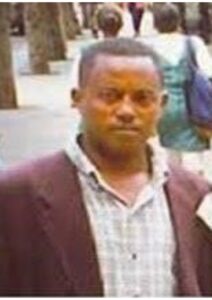
Temesgen Ghebreyesus (Journalist, Comedian, Actor, and Photographer)
Temesgen Gebreyesus is remembered for his acting, sharp sense of humour, and photography skills. He was arbitrarily arrested in September 2001, along with other journalists, for reporting on the letter by a group of dissenting members of the ruling party, known as the G-15.
Eritrean authorities have consistently refused to disclose his place of detention, or any information about his health and well-being.
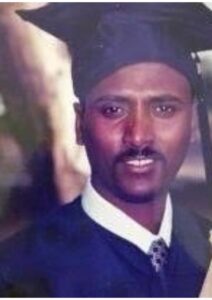
Matheos Habteab (Journalist)
Matheos Habteab is a co-founder and editor of the independent weekly newspaper, Mekalih (Echo). Based on credible sources, Habteab was transferred to a prison in the Dahlak Archipelago in late 2008.
He was later returned to Eiraeiro prison camp, where he reportedly died in 2010, as a result of poor health and the appalling conditions in the detention camp.
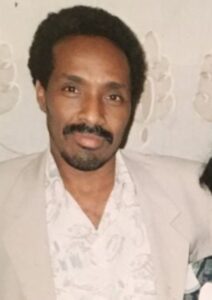
Idris Said ‘Aba Arre’ (Writer, Journalist and Translator)
Idris Said ‘Aba Arre’ was a prominent critic of Eritrea’s mother-tongue education policy. He was arrested after publicly denouncing the earlier arrest and detention of a group of dissenting ruling party politicians.
Months before his arrest, he published his seminal work on mother-tongue education, in which he criticised the government’s post-independence language policy and its negative impact on the majority of the country’s language groups.
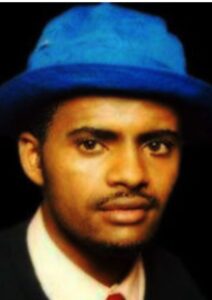
Dawit Habtemichael (Journalist and Teacher)
Dawit Habtemichael co-founded, together with Mathewos Habteab and others, the independent Tigrinya-language weekly newspaper, Mekalih (Echo), where he also served on the editorial board.
He was arrested on 21 September 2001 at the school where he was teaching.
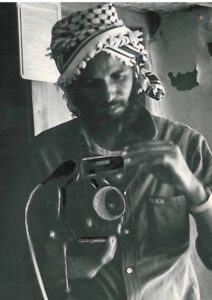
Seyoum Tsehaye (Journalist)
Seyoum Tsehaye was a freelance journalist at the time of his arbitrary arrest during the September 2001 crackdown on Eritrean independent media and critical voices. He has helped establish Eritrea’s first state TV channel, which he later left due to censorship.
He wrote critical articles on the government’s failure to respect human rights. Shortly before his arrest, he had written an article urging the Eritrean government to engage with the public and promote peace and justice.
Eritrean authorities have ignored repeated requests to disclose Tsehaye’s whereabouts and state of health.
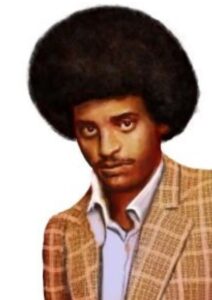
Yousif Mohammed Ali (Journalist)
Yousif Mohammed Ali was arbitrarily arrested and detained together with other independent journalists and critical voices, in September 2001.
At the time of his arrest, he was an editor at the independent weekly newspaper, “Tsigenay” (Honey) and worked for the Eritrean Ministry of Information.
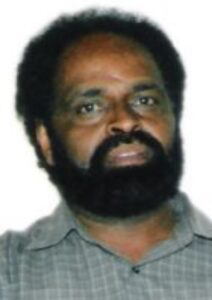
Fessehaye ’Joshua’ Yohannes (Writer, Journalist, Playwright, Poet and Lyricist)
Fessehaye ‘Joshua’ Yohannes was a co-owner of the independent Setit newspaper. He was arrested on the morning of 23 September 2001 during a massive crackdown by Eritrean security forces between September and October that year, targeting independent journalists and government critics.
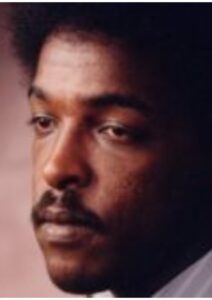
Dawit Isaak (Journalist, Writer and Playwright)
Dawit Isaak is a multiple award-winning Swedish-Eritrean journalist and co-owner of Eritrea’s first independent newspaper, Setit.
He was arbitrarily arrested at his home in Asmara on 23 September 2001 and has remained in prison ever since. He was reportedly released briefly on 19 November 2005 for medical reasons but rearrested two days later.
In a 28 March 2023 opinion, the UN Working Group on Arbitrary Detention concluded Isaak was held without legal basis, in retaliation for peacefully exercising freedom of expression, without a fair trial, and on discriminatory grounds. He is believed to be among the few surviving prisoners.
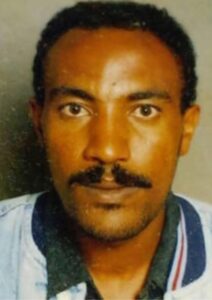
Amanuel Asrat (Journalist, Poet, Art Critic and Song Writer)
Amanuel Asrat is credited with reviving Eritrean poetry in the early 2000s. He founded Saturday’s Supper, a literary platform that inspired arts clubs across Eritrea, and was editor-in-chief and co-founder of Zemen, where he reported on government abuses.
He won national awards, including for The Scourge of War, translated into 16 languages, and received the 2016 Oxfam Novib/PEN Freedom of Expression Award and 2020 PEN Pinter Prize. On 23 September 2001, he was arrested during a crackdown on independent media. He was held at Eiraeiro prison before transfer in 2016 to an unknown facility. His whereabouts remain unknown, and he is believed among the few surviving detainees.
See the full letter below.
Eritrea: An Open Letter to President Isias Afwerki
A quarter-century of silence and impunity: a global demand for Proof of Life of Eritrean writers detained since 2001
Mr. President:
18 September 2026 marks exactly 25 years since your government launched a brutal crackdown on critics of your administration. Within days, Eritrea’s free press and the nation’s independent voices were systematically crushed.
The crackdown saw security forces arbitrarily arrest and detain journalists, writers, and poets who hoped to build a just, peaceful, and democratic Eritrea. We remember their names today: Amanuel Asrat; Dawit Habtemichael; Dawit Isaak; Fessehaye ‘Joshua’ Yohannes; Matheos Habteab; Medhanie Haile; Sahle ‘Wedi-ltay’ Tsegazeab; Said Abdelkadir; Said Idris ‘Abu Are’; Seyoum Tsehaye; Temesgen Ghebreyesus; and Yousif Mohammed Ali.
For a quarter of a century, these individuals have been held incommunicado and denied access to legal representation, medical care, and their loved ones. They are among the world’s longest-detained writers. Their only apparent crime was being independent voices and speaking of the Eritrea they dreamed of for the future. They should not have been detained in the first place.
The families of these writers, the Eritrean people, and the global literary community have been met with a painful and unlawful silence. To withhold all information regarding their health, location, and survival is a violation of international law and an act of cruelty.
We, the undersigned writers, journalists, poets, publishers, and human rights advocates from all corners of the world, write to you today with a single, urgent demand: provide immediate, verified proof of life for all arbitrarily detained Eritrean writers and critics.
Mr. President, Eritrea’s future must be built with its brightest minds, not based on their suppression. No writer or journalist should be disappeared for peacefully expressing their views.
We remain in solidarity with our missing colleagues, and we will not cease our efforts until they are free.
Signed by:
- Abdulai Sila, Guinea- Bissau
- Abedom Weldemariam, Luxembourg
- Abraham T. Zere, USA
- Ahdaf Soueif, United Kingdom
- Ahmed Sadeg, Sudan
- Akberet Mehari, The Netherlands
- Alfred Msadala, Malawi
- Allieu Kamara, Sierra Leone
- Alsadig Alradi, Sudan
- Amal Akasha, Sudan
- Amani Abdelgalil, Sudan
- Aminatta Forna, United Kingdom
- Andrea Barnet, USA
- Andrei Kurkov, Ukraine
- Annie Olivier, South Africa
- Anthony Doerr, USA
- Arlin Cicekci, Türkiye
- Awet Fissehaye Mebrahtom, United Kingdom
- Awet Mengsteab, The Netherlands
- Ayi Renaud Dossavi, Togo
- Beatrice Lamwaka, Uganda
- Ben Okri, Nigeria/United Kingdom
- Bibi Burger, South Africa
- Bokre Ghebreyesus, USA
- Bongani Kona, South Africa
- Burhan Sonmez, Türkiye/United Kingdom
- Canisia Lubrin, Canada
- Carole Carcillo Mesrobian, France
- Carolyn Cohagan, USA
- Catherine Banner, United Kingdom
- Catrina Wessels, South Africa
- Charles Foran, Canada
- Chidi Anthony Opara, Nigeria
- Chloe Aridjis, United Kingdom
- Christopher McFarlane, Australia
- Colm Toibin, Ireland
- Cristina Wormull Chiorrini, Chile
- Dacia Maraini, Italy
- Dan Midalia, Australia
- Daniel Kifle, United Kingdom
- Daniel Pedreira, Cuba/USA
- Daniel Semere Tesfai, Germany
- Denden Solomon, Uganda
- Dessale Berekhet Abraham, Norway
- Diane Alméras, Chile
- Dinaw Mengestu, Ethiopia/USA
- Dominique Gaucher, Canada
- Ekram Abdullah Berkia, Sudan
- Elif Shafak, Türkiye/United Kingdom
- Ellen van Pelt, Belgium
- Emad Badawi, Sudan
- Éric Brucher, Belgium
- Eric Lax, USA
- Erla Diedericks, South Africa
- Ermias Ekube, Sweden
- Faisal Elbagir, Sudan
- Fikrey Yeman, Norway
- Fr. Yonas Welderufael, Sweden
- Germán Rojas, Chile
- Ghirmai Negash, USA
- Ghirmay Yohannes, Sweden
- Gillian Slovo, United Kingdom
- Gioconda Belli, Nicaragua
- Gloria Browne-Marshall, USA
- Hafiz Azharr Hafiz Abbas Mohmed, Sudan
- Halima Abdulazeez, Nigeria
- Hanna Kumar, United Kingdom
Helene Jaccomard, Australia - Ibrahim Hassan (Kojan), Sudan
- Ira Wells, Canada
- Isabel Allende, USA
- Ishraga Mustafa Hamid, Sudan
- Issayas Beyene, United Kingdom
- Izak de Vries, South Africa
- Izzeldin Taha, Sudan
- J M Coetzee, Australia
- James Gleick, USA
- Jennifer Clement, USA/Mexico
- Jennifer Finney Boylan, USA
- Joanne Leedom-Ackerman, USA
- John Ralston Saul, Canada
- Josephine Scicluna, Australia
- Judith Wilkinson, Australia
- Julian Fellowes, United Kingdom
- Juliet Jacques, United Kingdom
- Kamal Bashari, Sudan
- Kamila Shamsie, United Kingdom
- Kokob Tesfaldet, Sweden
- Krishna Sen, Australia
- Lakshmi Kanchi, Australia
- Lamia Gasim, Sudan
- Lars Gudmundson, Norway
- Laura Hubber, USA
- Lauren Groff, USA
- Laurie Halse Anderson, USA
- Lemn Sissay, United Kingdom
- Lesley Marshall, New Zealand
- Lila Cona, Serbia
- Linwood Barclay, Canada
- Louis de Bernieres, United Kingdom
- Louise L. Lambrichs, France
- Lydia Cacho, Mexico
- Maaza Mengiste, Ethiopia/USA
- Madeleine Thien, Canada
- Mai Musie, United Kingdom
- Margaret Busby, United Kingdom
- Marian Botsford Fraser, Canada
- Max Porter, United Kingdom
- Mazen Darwish, Syria
- Mekonen Tesfai, USA
- Mercy Kannemeyer, South Africa
- Merel de Beer, Netherlands
- Mihret Kebede, Austria
- Mikhail Shishkin, Russian Federation
- Mille Rode, Denmark
- Mogahid Eisa Adam, Sudan
- Mogos Okbamichael, UK
- Mohamed Alsabd, Sudan
- Mohamed Sidahmed, Sudan
- Mujtaba Mannan, Sudan
- Munyao Kilolo, Kenya
- Mussab Mohammed Ali, Sudan
- Mustafa Adam, Sudan
- Muzna Abdulrahman Mohammed, Sudan
- Nadia Davids, South Africa
- Nadifa Mohamed, United Kingdom
- Nasser Ahmedin, Norway
- Nii Ayikwei Parkes, United Kingdom
- Obinna Chilekezi Nigeria
- Olga Tokarczuk, Poland
- Osama Altayeb, Sudan
- Osama Edries, Sudan
- Osman Omer (Turath), Sudan
- Paolo Giordano, Italy
- Philip Slayton, Canada
- Philippe Sands, United Kingdom
- Preti Taneja, United Kingdom
- Rashid Sid Ahmed Elsheikh, Sudan
- Richard Stursberg, Canada
- Ricky Monahan Brown, Scotland
- Roaya Yahya Idris Okasha, Sudan
- Robin Bower, Australia
- Rohinton Mistry, India/Canada
- Rui Umezawa, Canada
- Saba Kidane, France
- Said Khatibi, Algeria
- Salil Tripathi, India/USA
- Salma Abdelazim Yousif, Sudan
- Samar Yazbek, France
- Sandro Veronesi, Italy
- Sara Hamza Aljack, Sudan
- Sergei Lebedev, Russia
- Shawna-Leze Meiring, South Africa
- Sheng Xue, China
- Shishai Shimondi, Germany
- Shishay Gebrehans, Sweden
- Stella Gaitano, South Sudan
- Tedros Abraham Beraki, Sweden
- Tesfit Abraham, Uganda
- Tessy Baila, Greece
- Tice Cin, United Kingdom
- Toyin Adenubi, Nigeria
- Tsegay Mehari, Sweden
- Tsitsi Dangarembga, Zimbabwe
- Viv Glance, Australia
- Viv Groskop, United Kingdom
- Wagdi Elsheikh Manssour, Sudan
- Wahab Michael- Norway
- Wolfgang Martin Roth, Austria
- Yann Martel, Canada
- Yassmin Abdel-Magied, United Kingdom
- Yirgalem Fisseha Mebrahtu, Germany
- Yonas Haile, Sweden
- Yonatan Tsighe, USA
- Yonatan Tsighe, USA
- Yorn Young, Cambodia
- Yousif Alhabob, Sudan
For more information, contact Sabrina Tucci, Head of Communications and Campaigns for PEN International: Sabrina.tucci@pen-international.org.