
Interview by Michael Chiedoziem Chukwudera. Redrafted by Otosirieze.
When, in the 1950s, the famed potter Ladi Kwali joined the Abuja Pottery Training Centre as its first female student and teacher, she also became the first Gbagyi person to attain national renown. Not many other Nigerians who knew about her magnificent, proportioned water jars knew this. The Gbagyi were regarded as a quiet people, not as loud as the country’s three most populous ethnicities — the Hausa, the Yoruba, and the Igbo — or as other groups on the middle belt tier of historical visibility — like their neighbors, the Tiv and the Jukun. Across the mountains, hills, plains, and rolling savanna of Nigeria’s north-central region, the country’s most ethnically heterogeneous and culturally diverse region, they stood out for their weaving and their pottery, a coiling technique passed down matrilineally. Not many outside the Middle Belt knew this either. The Gbagyi had a proverb that seemed to mirror their place in the country: Before the ripening of fruit, what were the birds eating? They celebrated resilience and adaptability. They told their story in their art, inscribing geometric and animal motifs on clay pots, plates, and bowls.
The Gbagyi would not collectively make national headlines until 1976, when the military regime of Murtala Mohammed and Olusegun Obasanjo promulgated Decree No. 6, announcing the movement of the Federal Capital from the coastal, overpopulated Lagos to the very centre of the country: Abuja. Relocating the capital to a literal middle ground, what the regime presented as “no man’s land,” only years away from the genocidal Biafran War in the Southeast, was a way to curtail ethnic divisions and symbolize “national unity” and “neutrality.” Yet the costs were the Gbagyis’ to bear. They, and other less populous ethnic groups including the Gwandara, the Abawa, and the Basa, were displaced from their ancestral lands from the early 1980s. A new presidential villa, Aso Rock, was built on the ruins of a community shrine. Worse: the indigenes were poorly compensated.
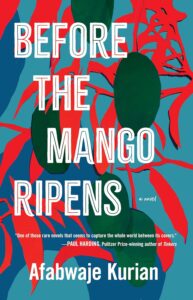
When Afabwaje Kurian began writing her 2024 novel Before the Mango Ripens, titled after that Gbagyi proverb, she initially alluded to that displacement. That draft of the novel was set in a longer timeline, from 1970 to 1976. She cut it because it wasn’t central to the story of Christianity that she was uncovering, and the published version plays out over the course of four months in 1971. In it, Zanya, a popular young missionary who believes that he has been called to lead the flock in the fictional town of Rabata, faces the reluctance of Reverend Jim, his mentor. They are at a crossroads, and other dichotomies are at play: the indigene converts and the foreign missionaries, the labourers and the church that underpays them.
Across the novel, there is tension at every turn, everyone fighting a peculiar battle, but in the big picture, it is a collective war of a society engulfed by religious colonialism. Afabwaje Kurian details the inner life of the clergy as well as how the laity succumb and which traditions have survived. The early 1970s setting, one year after the Biafran War, is sieved from a historical vantage that the Nigerian society is devoted to forgetting and that does not fall into the well-studied eras of Christian history.
The first significance of this novel is its mere existence. There have always been stories by minority ethnic Nigerian writers, but not enough of those focus on the histories of their groups.
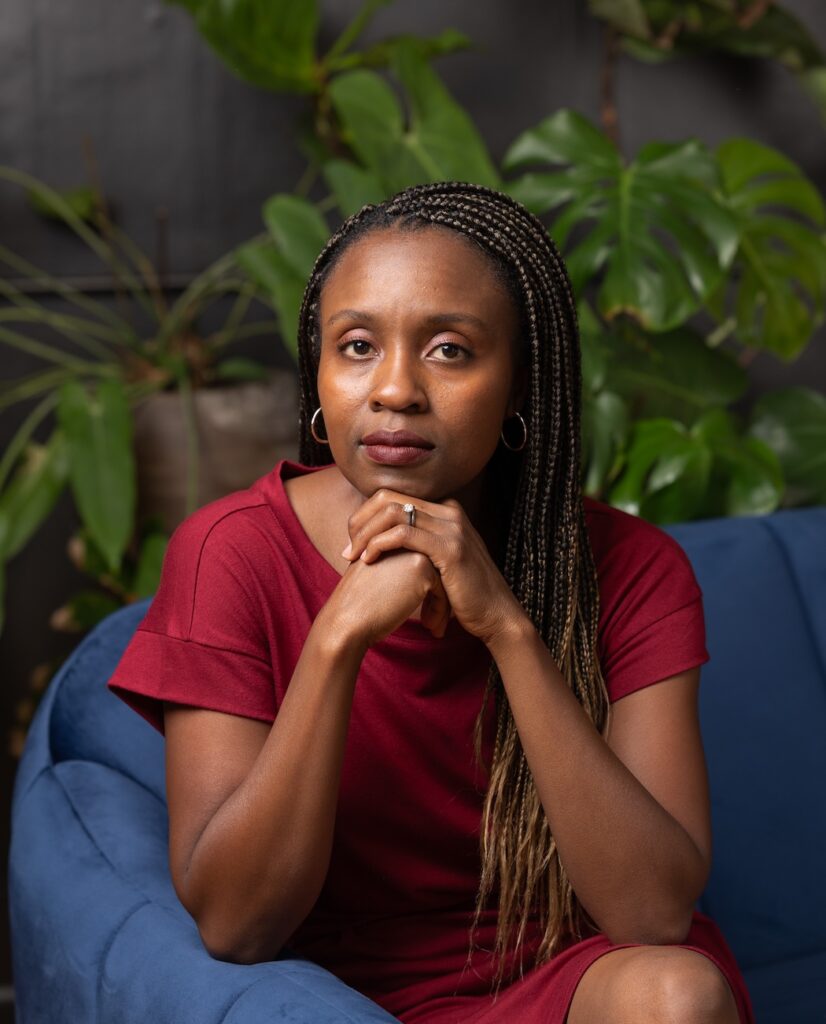
One year before Abuja officially became the new capital of Nigeria, Afabwaje Kurian’s family moved to the United States, to a town in the District of Columbia metropolitan area. It was 1990 and she was seven years old. She was in second grade and had begun writing then.
Her family lived in a predominantly Black neighbourhood. Understanding what it meant to be Black in America was an imperative for Black immigrants, and in high school, her sense of culture and identity formed.
“It offered me a deep understanding of the African American experience and history,” she said. “These schools steeped their students in history in a way that predominantly White schools did not. I was very lucky to absorb that and [know] at an early age what African Americans endured and how they paved the way and fought for the rights that many Black immigrants have been granted. It shaped me.”
Even as childhood sparked the creative instinct and gave Afabwaje Kurian a means to explore her identity, as she advanced in school, she took the pre-med path. She went to college in Ohio and majored in Biology, then got a master’s in public health.
Medicine has a long, celebrated history in literature. Kurian drew technical connections.
“The study of public health incorporates various disciplines, such as anthropology, sociology, and psychology,” she wrote in an email. “These are the same disciplines that authors call upon when researching, observing, and writing. Writers are constantly studying people and observing reactions and behaviors. We gather data, take in the world around us, how it works, how people think, and how people relate to each other. Public health is also interested in how outside factors and the environment affect an individual, including policies, neighborhood infrastructure, religion, historical and generational trauma, discriminatory systems, and familial relationships.”
Those are the same factors she considers when developing a character. “It’s never one thing acting upon how my character chooses to show up in the world. I’m often asking myself how some of these same factors influence a character’s beliefs, thoughts, or behavior. Zanya is a prime example. How does a newly independent Nigeria affect what he believes he is capable of in Rabata? How does his faith guide him? How is he stymied because of the discriminatory and patriarchal systems the American mission has created? How do his familial relationships impact how he walks through the world?”
But back in graduate school, her writing was restricted to blogging, journalism, and playwriting. A light play of hers, See Me, See Trouble, was staged by a theatre group. Then, one Saturday morning, she walked into a fiction class at The Writer’s Center, Bethesda, Maryland, and the professor and novelist Tricia Elam read her work, took her aside after class, and said, “You should be writing. You should be a writer.”
It was the confidence boost she needed. She started working on short stories, applying to workshops and conferences.
“For one of the conferences I applied to, I received a scholarship for ‘a writer of unusual promise,’” she recalled. “I tend not to take such labels too seriously, but it was another confirmation of being on the right path in pursuing writing as more than a hobby.”
Afabwaje Kurian had worked in public health for a decade before she started what she believed would be a novel about “an American wife.” But: “I felt as if the protagonist I started with began to be interested in where he had come from and who he was,” she said. This American character could never know until its author learned about her own Gbagyi roots. It opened a new portal of historical inquiry. “And that took me back to the 70s.”
Her family has a Christian clerical history. Her maternal grandfather was a pastor. Visiting Nigeria in 2015, she took the opportunity to talk to him. She went with her father and an uncle, and they spoke for four hours.
“He was able to speak to the traditions that we lost as Gbagyi people, by the people specific to that region, what we lost because of the advent of Christianity. My father and uncle realized that there was a history that they also didn’t know as well. It was informing all of us.”
That conversation between three generations of the family changed the setting of her book entirely. It went from an immigrant tale in America to a historical novel about a young missionary recruit and his mentor after the first decade of Nigeria’s independence.
Last Christmas, over a year after the novel came out, her father gave her a folder of old files and documents from her elementary school in the United States. On one paper from sixth grade asking about her favourite hobby, she saw that she had written: writing books. Looking back now, she sees her journey as part of a subconscious inheritance.
“My dad, at one point, wanted to be a fiction writer,” she shared. “He’s an engineer who wanted to be a fiction writer, and he had said that if he ever wrote anything, it would have been about the missionaries in the town where he grew up.”
Historical fiction relies on research, and it took Afabwaje Kurian 10 years to build out a story from her material. In Nigeria, she interviewed more relatives and picked up Joseph Shekwo’s Gbagyi Folktales and Myths. In America, she spoke with missionaries who were in Nigeria in the 70s, 80s, and 90s. She visited the archives of Billy Graham, the evangelist who undertook an 11-country tour of African countries in 1960; she read the letters that Vera Thiessen, the missionary nurse in Congo from the 40s to the 70s, wrote to her sister and mother. Kurian wanted first-person context for her inclusion of medical practitioners in the novel.
She found Every Square Inch, a five-volume memoir by the Dutch missionary couple Jan H. Boer and Frances A. Boer-Prins of their 30-year work in Nigeria. She found articles about labourers, strikes, and on John Gatu, the General Secretary of the Presbyterian Church of East Africa, who in 1971 issued a moratorium on Western missionaries and funds, arguing that their leaving would end colonial dependency.
The research was “the challenging part,” Afabwaje Kurian said. “At one point, in one of my early drafts, I had two parallel stories going, one in the 90s and one in the 70s. I had not yet made up my mind to dedicate myself to the 70s period. And so having to make the choice of what I was going to focus on was difficult since it required losing hundreds of pages and reconceptualizing the novel.”
Nigerian American writers — Naijamerican, as some say — are often criticized for their inability to accurately capture the geographical context and the lingual, sociological, and psychological nuances of Nigerians in fiction, and it is a genuine challenge to craft and research that Afabwaje Kurian grapples with in Before the Mango Ripens.
“The lack of familiarity,” she replied. “I mean, if you’re writing about a decade that you didn’t grow up in, there’s a lot of research you’re doing about that decade trying to have language and trying to think of vocabulary, and you have to pay attention to fidelity to dialogue, you know. So that was difficult. Having my father who grew up at that time, review [the novel], was very important to me.”
It is Afabwaje Kurian’s awareness of her positionality that lends Before the Mango Ripens its audacity and indigenous psychology. It is not written from the perspective of an emigrant. It is attempted from a native vantage. To a reasonable degree, it manages well with language and its employment of Pidgin English. That may seem casual but is not, since Afabwaje Kurian left Nigeria aged seven. One of the novel’s successes, as will be observed when it gets into the Nigerian market, is its fidelity to its subject, and Afabwaje Kurian’s ability to construct her story within the confines of what is available to her. One recognizes the class struggles in these pages, and, for people like me who grew up close to missionary households, the imperfections which all too soon disillusion you.
But she didn’t set out to write a book that laments lost cultural practices, until she spoke to her grandfather. “I sensed the depth of loss and anger over the traditions and beliefs the Gbagyi people lost with the advent of Christianity. [But] I was also interested in the complicatedness of the Christian faith in an African context, in showing a people who were not passive observers or unwilling, hostile subjects to it. I wanted to tell a story of people who rejected Western customs and yet authentically accepted Christianity. Lamin Sanneh [writes] eloquently on this in his book, Whose Religion Is Christianity? The Gospel Beyond the West. I think this is a narrative that’s often overlooked.”
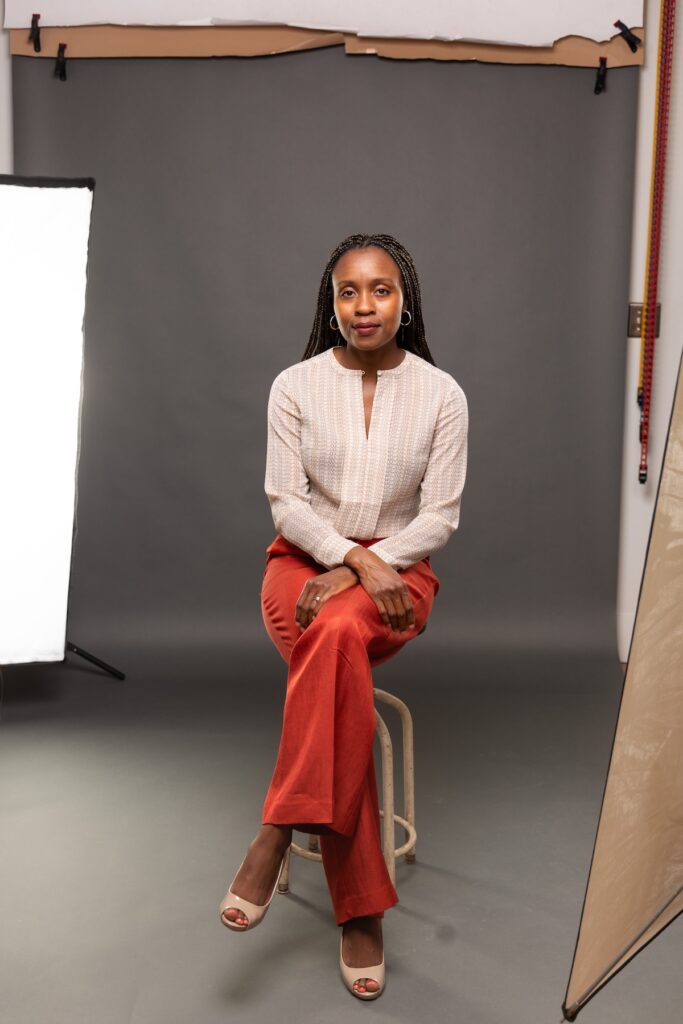
Afabwaje Kurian is in a phase of growing her roots, personal and professional. She and I first spoke in early January. It was 8:30 am in Iowa City and 4:30 pm in Nigeria. She had a milk sweater and a head tie on for winter. She smiled easily, plunging into thought as she told me about her time at the Iowa Writers’ Workshop, where she was a student and had returned as a Visiting Assistant Professor. She told me she just finished a draft for her second novel, a story of motherhood influenced by Buchi Emecheta’s The Joys of Motherhood.
“I don’t believe that you have to have an MFA to be a writer,” she said, noting that she took writing classes before Iowa. “So I wasn’t always sure if that was a path I was going to take. I workshopped excerpts of the novel, which was helpful. Each person put up their novel to be critiqued, and each person, every week, would read a novel in its entirety, and give feedback to the writer. It was very, very helpful to finally have people look at a full draft of my novel and offer me feedback.”
That Novel Workshop took place in her final semester, and the instructor, Pulitzer Prize winner Paul Harding, took interest in her work. He provided a blurb (“One of those rare novels that seems to capture the whole world between its covers”), as did another graduate of the Workshop, DK Nnuro (“a masterful achievement of craft and soul”). The novel’s final pages also contain an interview of Kurian with Harding. In an industry that thrives on networking, such support has been influential.
On its own, though, Before the Mango Ripens has been well received, making the shortlist of the Aspen Words Literary Prize. Kurian went on tour. “It’s exciting to have people who have never heard of you pick up your book because the story draws them in,” she said.
In Iowa, she had a community of Nigerian writers, including the short story writer Arinze Ifeakandu and the poet Gbenga Adeoba. But beyond America, she admits to not being familiar with the local scene.
“What I’ve really been excited about is that we’re seeing Nigerian authors break into genres outside of the literary, political, or post-colonial novel,” she said, listing Nikki May’s Wahala, Tomi Adeyemi’s fantasy series Children of Blood and Bone, and Oyinkan Braithwaite’s psychological thriller My Sister the Serial Killer. “I sometimes feel that Nigerian writers are pigeon-holed as strictly producers of literary works.” She notes the thematic range, too: “You now have Nigerian writers exploring formerly taboo topics of queerness and sexuality.”
Being Black in America and Gbagyi in Nigeria means that, in her two countries, Afabwaje Kurian belongs to a minority group, that she is doubly minoritized. In fact, she may be the first recognizably Gbagyi writer to publish a notable book-length work of fiction. She is certainly the first to be featured in this magazine.
“For me the feeling of being minoritized as a Gbagyi person is minimal and not as acutely felt because the majority of my upbringing was in the US,” she said. “The Nigerian community I was a part of in the Midwest was also inclusive and supportive, so there were no divisions or separation that I felt or sensed as a child or adolescent.”
Yet it is a more nuanced subject than people understand: “For those who have immigrated, you often face pressures that you’re not American enough and pressures that you’re not Nigerian or African enough. You exist in a liminal space or third culture.” In the novel, a character named Tebeya returns from her education in Ireland and the locals in Rabata deem her behaviour strange, unrecognizable.
“There’s a sense that you have to prove how Nigerian or African you are and that you might fail to do so with what you know or don’t know about the country or continent,” she added. “We know that immigrants are not a monolith and have varying degrees of relationship with their country of origin.”
What tussle there is for the future of the fictional Rabata might call to mind the Gbagyi question in today’s Nigeria.
Although the Federal Capital Territory is on Gbagyi lands and the Gbagyi are still fighting for full compensation for its seizure, although, literally and symbolically, they are at the heart of Nigeria, awareness of the Gbagyi remain relatively low outside the North Central region. A new campaign for an Abuja State — meant to address the wrongs meted out to indigenes of the Federal Capital Territory, including the Gbagyi, the Ebira, the Koro, the Nupe, the Gwandara, the Gbade, the Amwamwa, the Bassa, and the Ganagana — has not received national attention. Many Nigerians even unwittingly call them by the pejorative name that their Hausa majority neighbours gave them: “Gwari.”
Since Ladi Kwali, a host of Gbagyi people have earned national attention. They include former military tyrant Ibrahim Babangida, under whose dictatorship Abuja was finalized as the national capital and who did not ensure the compensation of his maternal people; former senator David Umaru; and the singer Bez. An image of Kwali and her pots appear on the N20 note, making her one of only three women printed on an African currency. Her face is seen and touched by hundreds of millions and yet her roots are unfamiliar, even as her work continues to be exhibited abroad and celebrated in intellectual and culture circles, with her being the most recent cover of the Nigerian magazine The Republic. Her simultaneous visibility and unfamiliarity to many in the country tells its own story of being from a minority group in a country with around 250 ethnic groups and 400 languages; of how a people can define a nation and still be unknown.
Afabwaje Kurian’s 2015 trip to interview family was her second ever visit to Nigeria since leaving. The first was in 2008, when she was 25. “I wish I had a stronger relationship not only with Nigeria but also with Gbagyi culture,” she said. “It’s the sentiment of many first-generation immigrants in the diaspora.”
And yet Before the Mango Ripens has provided an irony. She said that her cousins reached out to say there was so much Gbagyi cosmology and familial history in the novel that they had not known. She, the emigrant, had learned more about Gbagyi culture than relatives who grew up in Nigeria. “I became an unofficial family historian,” she said. ♦
If you love what you just read, please consider making a PayPal donation to enable us to publish more like it.
Buy the novel by Afabwaje Kurian. Open Country Mag may earn an affiliate commission.
- Before the Mango Ripens (Dzanc Books, 2024)
More In-depth Stories from Open Country Mag
— The Digital Crusades of Ikhide Ikheloa
— Chimamanda Ngozi Adichie Is in a Different Place Now
— In Great Grief, Mubanga Kalimamukwento Saw Zambia
— How uHlanga Press Disrupted South African Poetry
— JK Anowe, a Confessional Poet, Confronts Himself
— The Prodigious Arrival of Arinze Ifeakandu
— Aiwanose Odafen‘s Duology of Womanhood
— Momtaza Mehri’s Fluid Diasporas
— The Overlapping Realisms of Eloghosa Osunde
— How Teju Cole Opened a New Path in African Literature
— Maaza Mengiste‘s Chronicles of Ethiopia
— How Tsitsi Dangarembga, with Her Trilogy of Zimbabwe, Overcame
— In a Time of Fire, Chuma Nwokolo Protects His Purpose
— How Leila Aboulela Reclaimed the Heroines of Sudan
— The Methods of Damon Galgut