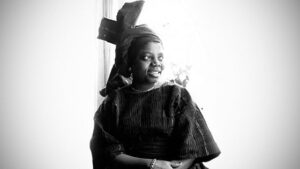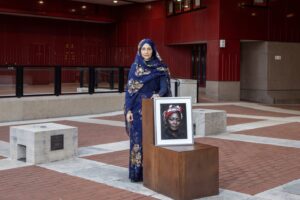


We are excited to announce our second public event. Open Country Mag will be hosting two 2021 O. Henry Prize winners, the Nigerian writers Jowhor Ile and Adachioma Ezeano, in a conversation on the art and state of the short story. The event, on our Instagram Live, will be introduced, and partly moderated, by the Nigerian writer Frances Ogamba, who did the same for our first public event hosting Lolwe and Doek! magazines.
Ile, author of the Etisalat Prize-winning novel And After Many Days, and Ezeano were selected, together with 18 others, for their respective stories “Fisherman’s Stew” and “Becoming the Baby Girl.” Both stories will appear in The Best Short Stories Anthology 2021, guest-edited and introduced by Chimamanda Ngozi Adichie, who has called the winning pieces “profoundly wise.”
Part of Open Country Mag’s mission is to bring back and contextualize essential African literary conversations, and this, two Nigerians winning O. Henrys, is an exciting moment to capture.
Ile and Ezeano will read from and discuss “Fisherman’s Stew” and “Becoming the Baby Girl,” what their presence in the anthology means for the visibility of Nigerian short fiction, the general state of contemporary short fiction, and what it means to be a writer in this climate and in their different contexts, Ile being a novelist and professor and Ezeano having learned the craft in Nigeria before going for an MFA.
Our Guests
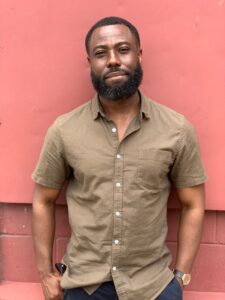
Jowhor Ile was born and raised in Nigeria. He won the Etisalat prize in 2016 for his novel And After Many Days, and his short story was awarded the O. Henry Prize in 2021.
Ile’s short fiction has appeared in The Sewanee Review, McSweeney’s Quarterly, and Litro Magazine. He has taught at West Virginia University and at Boston University where he gained his MFA. Ile lives in London.
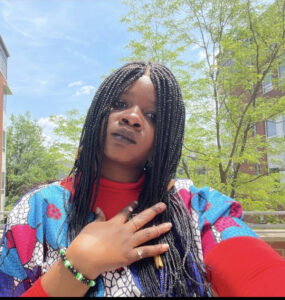
Adachioma Ezeano is an MFA student at the University of Kentucky. Her work has appeared in The Best Small Fictions: 2020, McSweeney’s Quarterly, and FlashBack Fiction. She is a 2021 O. Henry Prize recipient.
Our Moderator
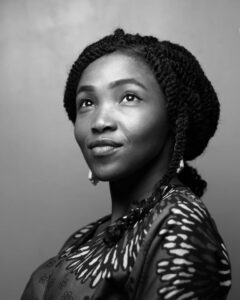
Frances Ogamba is the winner of the 2020 Inaugural Kalahari Short Story Competition and the 2019 Koffi Addo Prize for Creative Nonfiction. She was a finalist for the 2019 Writivism Short Story Prize and the 2019 Brittle Paper Award for Short Fiction.
Her fiction has appeared or is forthcoming on Chestnut Review, CRAFT, The Dark Magazine, midnight & indigo, Jalada Africa, Cinnabar Moth, The /tƐmz/ Review, and elsewhere. She is an alumna of the Purple Hibiscus Creative Writing Workshop taught by Chimamanda Adichie.
A video of this conversation will be available afterwards on Open Country Mag’s website and social media. ♦
If you love what you just read, please consider making a PayPal donation to enable us to publish more like it.
In-depth Stories from Open Country Mag‘s The Next Generation Series
— What Adedayo Agarau Got from His Fathers
— Afabwaje Kurian Grows Her Gbagyi Roots
— In Great Grief, Mubanga Kalimamukwento Saw Zambia
— JK Anowe, a Confessional Poet, Confronts Himself
— The Prodigious Arrival of Arinze Ifeakandu
— Aiwanose Odafen‘s Duology of Womanhood
— Momtaza Mehri’s Fluid Diasporas
— The Overlapping Realisms of Eloghosa Osunde
— DK Nnuro Finds His Answers
— How Romeo Oriogun Wrested Poetry from Pain
— Suyi Davies Okungbowa Knows What It Takes
— Why Tobi Eyinade Built Rovingheights, Nigeria’s Biggest Bookstore
— Remy Ngamije on Doek! and the New Age of Namibian Literature
— Ebenezer Agu on 20.35 Africa and Curating New Poetry
— In Writing Cameroonian American Experiences, Nana Nkweti Crosses Genres
— Oghenechovwe Donald Ekpeki‘s Curation of African Speculative Fiction
— Logan February on Their Becoming
— The Cheeky Natives Is Letlhogonolo Mogkoroane and Alma-Nalisha Cele‘s Archive of Intentionality
— Cheswayo Mphanza on Intertextual Poetry and Zambia’s Moment
— The Seminal Breakout of Gbenga Adesina
— Keletso Mopai Owns Her Story and Her Voice
— Troy Onyango on Lolwe and Literary Magazine Publishing in Africa
— At Africa in Dialogue, Gaamangwe Joy Mogami Lures Out Storytelling Truths
— Khadija Abdalla Bajaber on Fantasy and the Character of Kenyan Writing
— TJ Benson Holds History and Hope