
During her time as Artist-in-Residence with the University of Calgary’s Libraries and Cultural Resources, Iheoma Uzomba pored over the Canadian folklorist and educator Edith Fowke’s song collection. The residency allowed artists to engage with Fowke’s fonds, and the archive was the most expansive collection of folk songs Uzomba had yet encountered. The material swelled with every dip, threatening to becloud any emergent research idea. Eventually, she narrowed her scope to women’s music.
Listening to Canadian singers from the early 1900s, she came into an inner world that took different emotional shapes across records. “I was struck by a distinct emotional interiority: pain, fear, desire, restraint, and, most compellingly, resilience,” she told me. “These songs revealed forms of expression that were deeply affective and shaped by the social constraints of their time.”
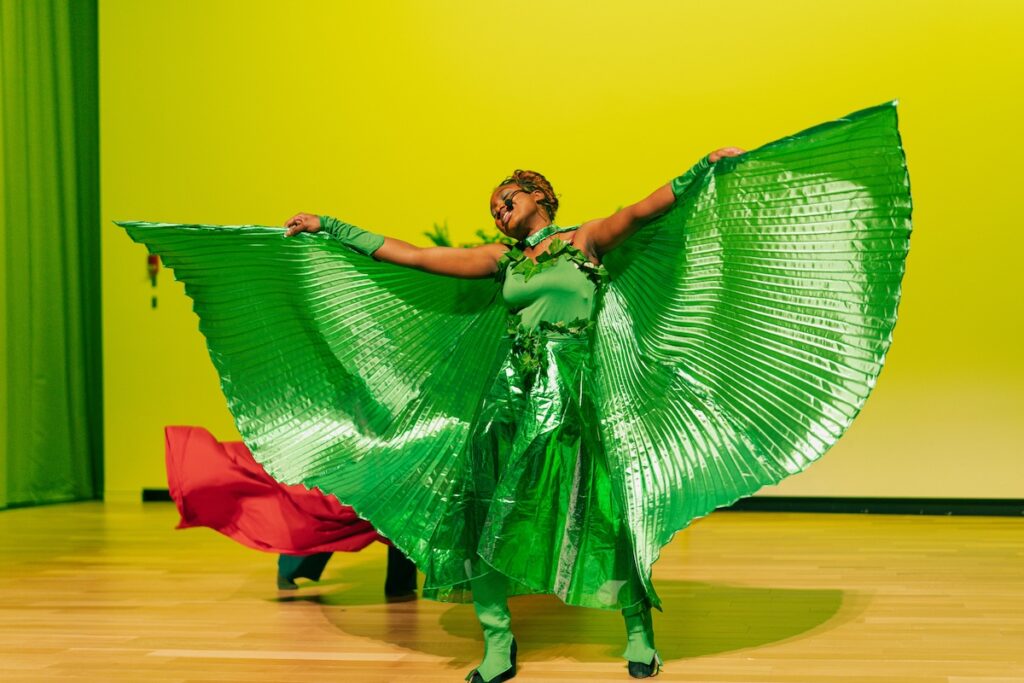
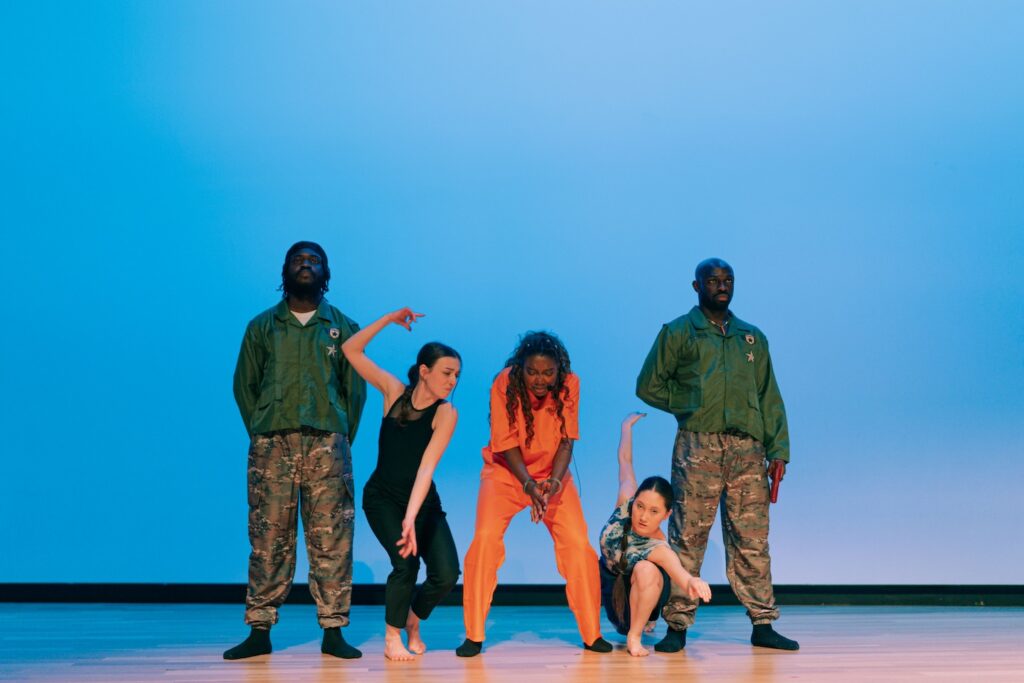
That encounter was the conceptual starting point for Pretty Dangerous: Four Acts on Womanhood, her interdisciplinary work of poetry, music, dance, and theatre, staged in March at the Calgary Central Library. The production explored the complexities of gender performativity through four female characters, each the focus of an act. “Across the four acts, I took risks by making sure the work resists a singular, stable image of womanhood on either extremes of victimhood or vigor,” she said.
If the title “Pretty Dangerous” suggests a tension between desirability and threat, it is deliberate. “To be ‘pretty’ is to be aestheticized, contained, and made legible within socially acceptable forms of femininity; to be ‘dangerous’ is to be disruptive, unruly, and resistant. By bringing these terms together, I wanted to highlight how gender is constructed through performance, but also how those performances can be dismantled, reworked, and reclaimed.”
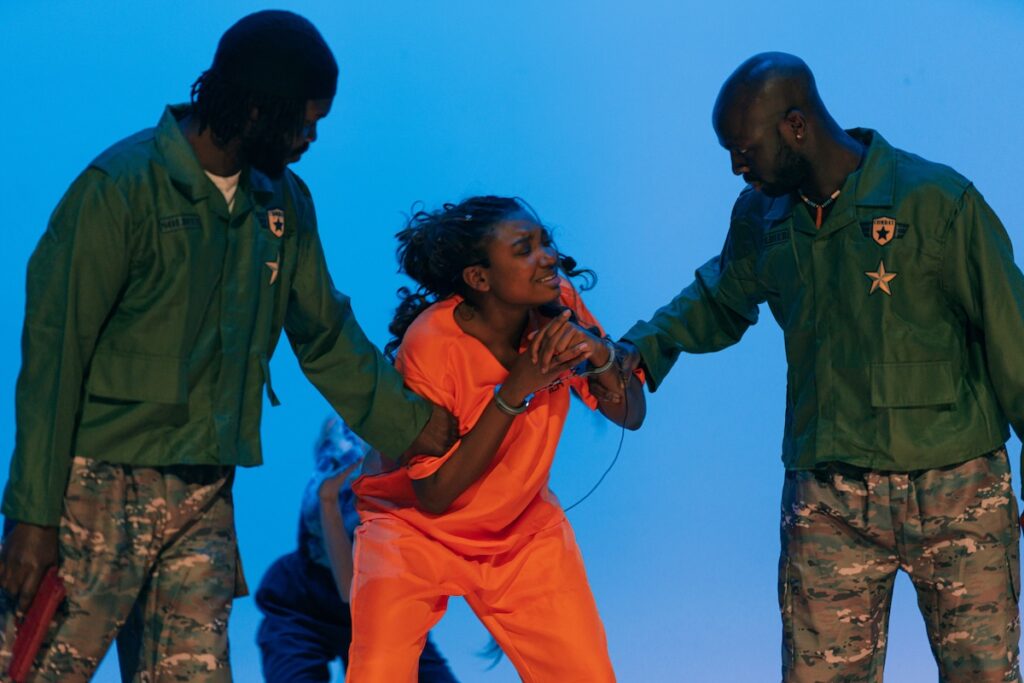
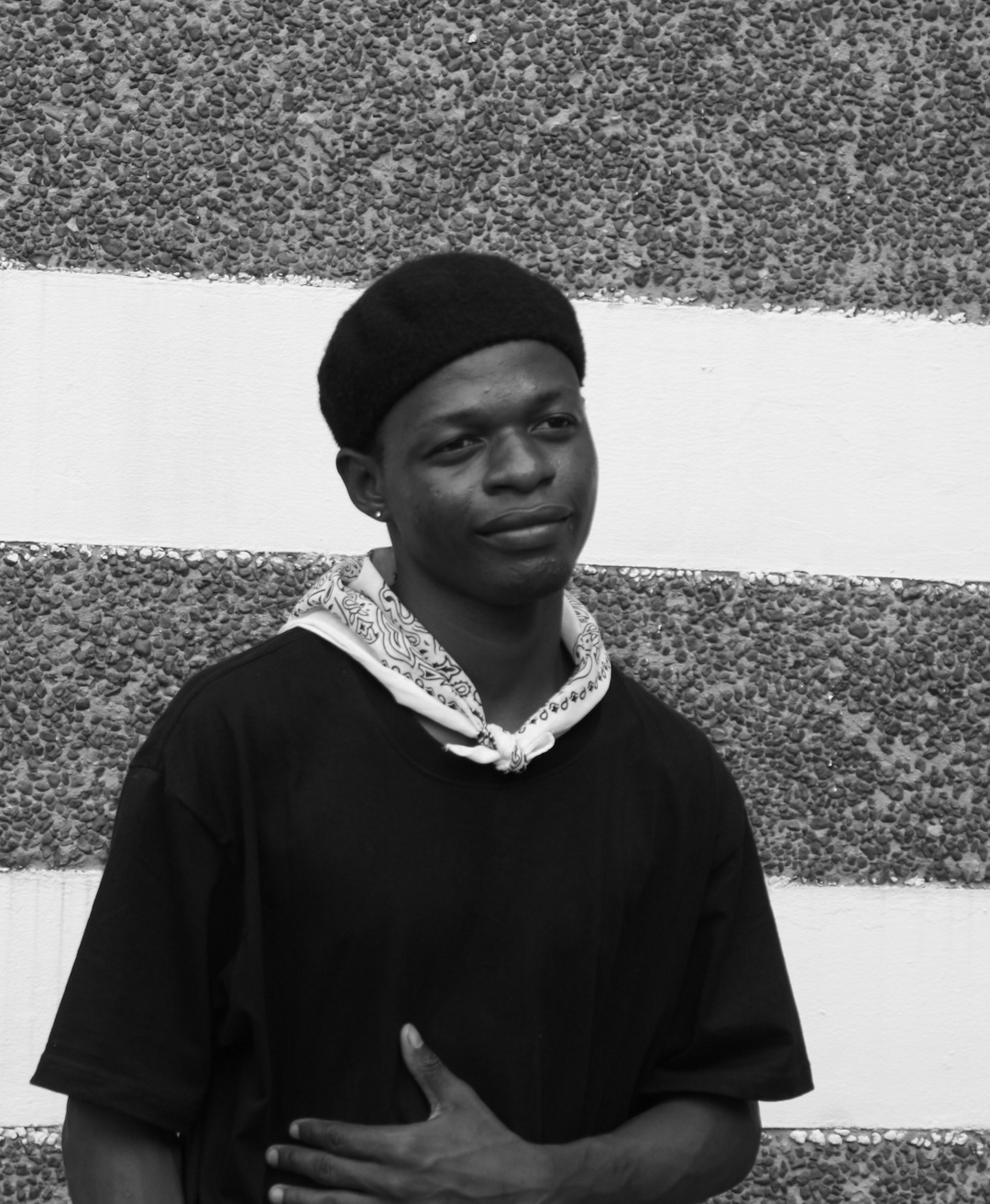
Uzomba, who goes by the stage name Oma is Loud, has built a reputation as one of the most versatile young writers on the African scene. She has published poems in such notable journals as Prairie Schooner, Rattle Magazine, Palette Poetry, The Chestnut Review, and The Shore Poetry; she has won the Glenna Luschei Award for Poetry, the Lagos–London Poetry Prize, the Vancouver Poetry Slam, the Canadian National Poetry Slam, and, thrice, the Calgary Poetry Slam; and she serves as a Poetry Translation Center (UK) UNDERTOW Fellow. In-between, she carved out space in literary journalism as an Open Country Mag staff writer, penning insightful Profiles of African writers, from poets JK Anowe, Momtaza Mehri, and Gbenga Adeoba to novelist Aiwanose Odafen.
In April, she received an honour that most African poets covet: the Bernadine Evaristo Prize for African Poetry, formerly the Brunel International African Poetry Prize. Previous winners include Warsan Shire, who went on to collaborate with Beyonce, and Safia Elhillo, who performed at the Winter Olympics. The prize judges — poets Ladan Osman, Tsitsi Jaji, and Leila Chatti — chose her 10-poem submission “Father’s Love” for how it captures “the fractures of familial dysfunction as they unfold through both the father and the mother.”
“This win returns me to 2018, to a younger version of myself in Nsukka, first year at the University of Nigeria, restless, pacing, and trying to find a path into poetry,” she said. “I remember reading Romeo Oriogun around the time his work was recognised by the Brunel Prize, and feeling a door open, a beckoning to dream too. I was writing then, urgently trying to clear a small space for my own voice among the many I admired. It feels strangely circular. The judges, Tsitsi Jaji, Leila Chatti, and Ladan Osman, are poets whose works have accompanied me, and, might I add, unsettled me into growth. To know that they have now encountered mine, and found something there that speaks back, gives me heart throbs for sure.”
In Pretty Dangerous, poetry is the spine of the production, the emotional thoroughline for movement and the theatrical elements. With it, Uzomba generated imagery, rhythm, and emotional texture, which then informed the choreography and the dramaturgy. Though this specific act of blending forms and collapsing boundaries is her first, her approach to materials has always been multidisciplinary. “My ethos as an artist reflects how much of my life is shaped by mobilities and multiplicities: of place, form, and experience,” she said. “Working across disciplines feels like a natural extension of how I think and create.”
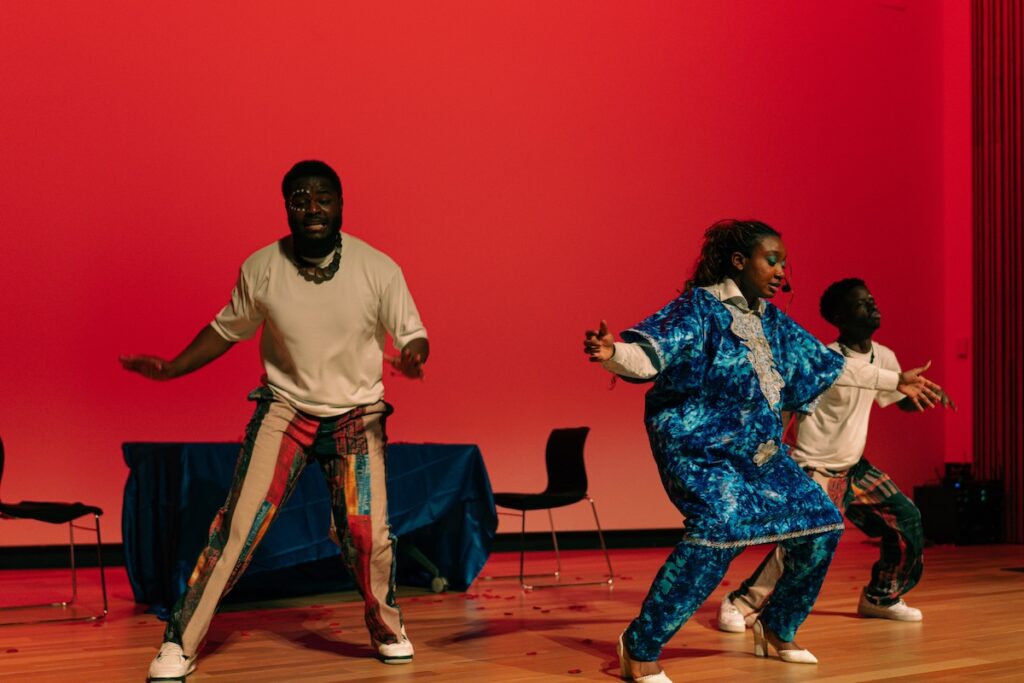
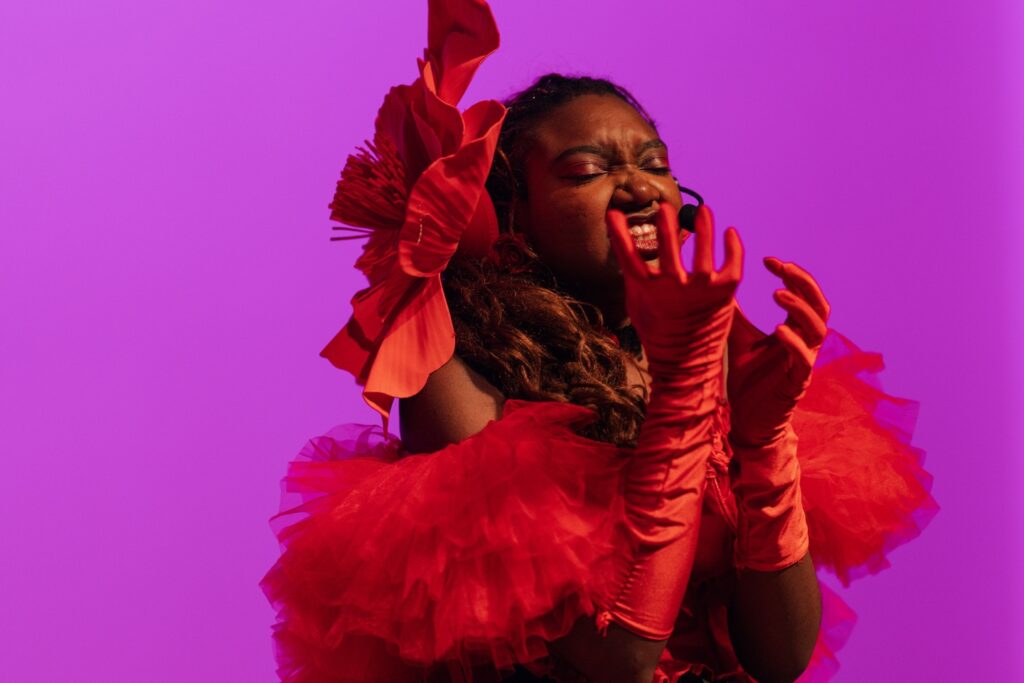
The production is also her way of hacking away at the hierarchies placed on different art forms and the rigidity that keeps them apart. She had to not only make poetry, theatre, and dance coexist; she also had to make each actively shape the others in real time.
“I’m drawn to forms that travel, overlap, and transform, rather than remain fixed,” she said. “The movement extends to identity as well. I inhabit many in-between spaces, culturally, geographically, and artistically. Interdisciplinary practice becomes a way of holding those in-betweens, allowing multiplicity to exist without needing to resolve it into a single category. Hence, for me, interdisciplinarity is a political gesture, one that resists containment of any form and invites more expansive ways of creating and existing in the world.”
Pretty Dangerous is at home in her vision of art. “I see this as part of a larger body of inquiry I’m building toward,” she said. “I’m increasingly interested in creating performances that emerge from research and then translating that material into interdisciplinary creative modes: poetry, dance, and theatre.” ♦
If you love what you just read, please consider making a PayPal donation to enable us to publish more like it.
More In-depth Stories from Open Country Mag
— Afabwaje Kurian Grows Her Gbagyi Roots
— The Digital Crusades of Ikhide Ikheloa
— Chimamanda Ngozi Adichie Is in a Different Place Now
— In Great Grief, Mubanga Kalimamukwento Saw Zambia
— How uHlanga Press Disrupted South African Poetry
— JK Anowe, a Confessional Poet, Confronts Himself
— The Prodigious Arrival of Arinze Ifeakandu
— Aiwanose Odafen‘s Duology of Womanhood
— Momtaza Mehri’s Fluid Diasporas
— The Overlapping Realisms of Eloghosa Osunde
— How Teju Cole Opened a New Path in African Literature
— Maaza Mengiste‘s Chronicles of Ethiopia
— How Tsitsi Dangarembga, with Her Trilogy of Zimbabwe, Overcame
— In a Time of Fire, Chuma Nwokolo Protects His Purpose
— How Leila Aboulela Reclaimed the Heroines of Sudan
— The Methods of Damon Galgut