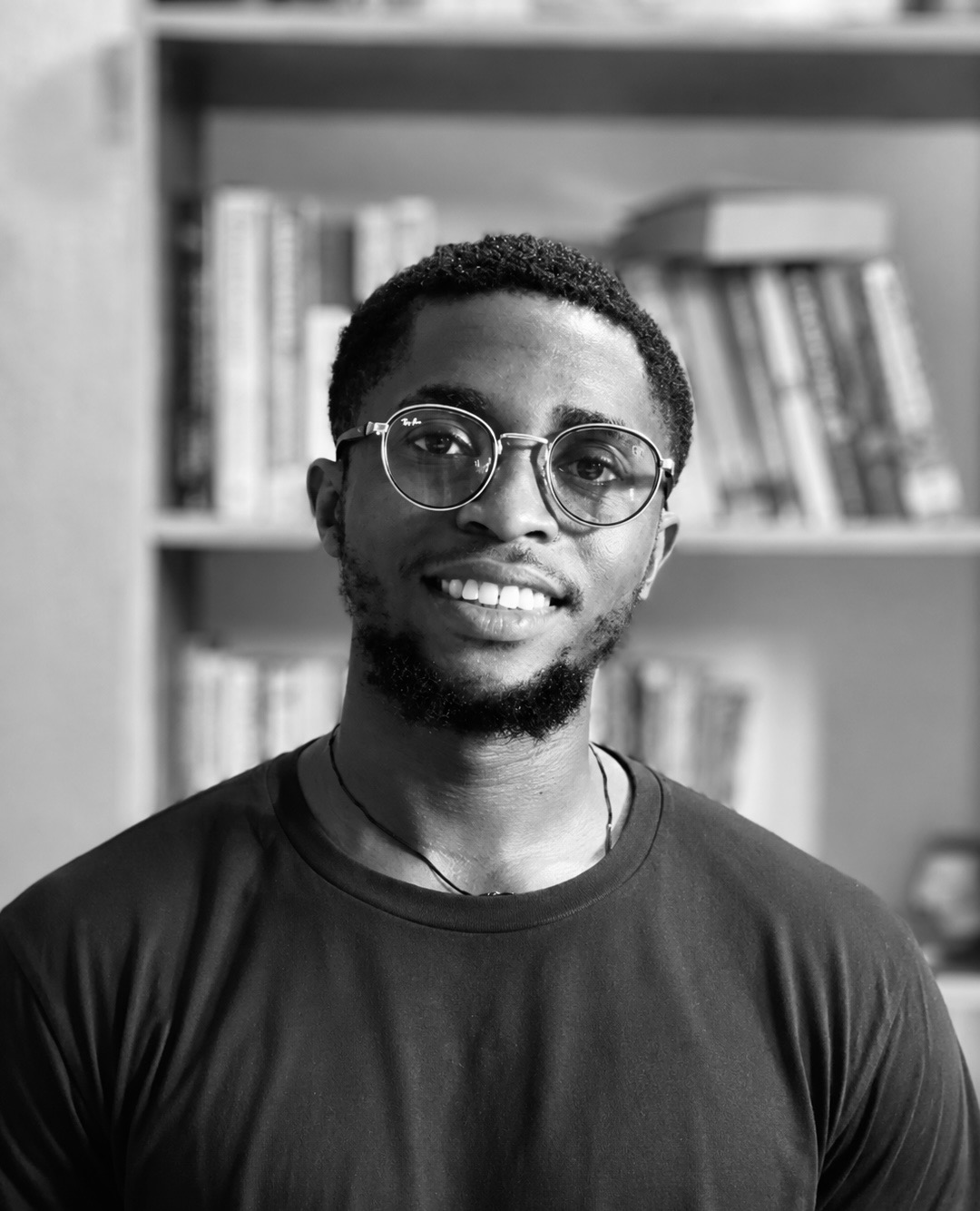

Initial interview and drafting by Michael Chiedoziem Chukwudera.
When Ikhide Ikheloa published a sharp blogpost on Fiston Mwanza Mujila’s Tram 83 in April of 2017, he did not anticipate that the novel’s growing reputation would dim from his words. The book is set in a nameless, war-torn African city, where opportunists flock to exploit its mineral and human resources. Most of the narrative happens in a hedonistic nightclub, in a surreal, jazz-infused world, with characters struggling for survival, with no fixed morality. It had won its Congolese author the Etisalat Prize for Literature — jury chair Ato Quayson praised its “improvisational jazz rhythms” — and was described by The Guardian as “wowing the literary world.” Then Ikhide read it and wrote:
Tram 83 starts with a promise. And ends right there, dissolving into the detritus of Black Africa’s failures and regurgitating the same old tired stuff. There is nothing original in Tram 83, and not much that is creative, sadly. In fact, many African writers should protest such disrespect to their work, which is the propagation of poverty porn as African literature.
He called out the novelist Alain Mabanckou who’d written in his Foreword: “This is a masterpiece! . . . written with the kind of magic one finds in only the best of storytellers . . . a glimpse at the underbelly of life that is so rarely featured in sub-Saharan African literature.”
“Clearly, either Alain Mabanckou and I read two different novels with the same title, or he has not been reading a lot of contemporary African literature lately,” Ikhide wrote. “I thought we had gone past the notion of African writing as a pejorative, the expectation that the only literature that can come out of Africa is one that reeks of misogyny, sexism, patriarchy, despair, poverty, wars and rapes, with women and children objectified as unthinking sex objects, hewers of woods, and mules.”
Ikhide’s blogpost — subtitled “Requiem for the African writer, and again, the balance of today’s stories” — ignited a continent-wide social media argument. Richard Oduor Oduku, the Kenyan critic, challenged his take. Oduku said that Ikhide read African literature singularly as anthropological documents; the book was, he wrote, “for readers like me who feed a lot on dada surrealism.” Zukiswa Wanner, a South African writer who sat on the jury, accused Ikhide of dismissiveness.
But agreeing with Ikhide’s claims of misogyny were Bwesigye Bwa Mwesigire, the Ugandan curator, and Petina Gappah, a Zimbabwean writer. Tsitsi Dangarembga was blunt: “I think that depicting misogyny in a way that does not clearly indicate that it is unacceptable means that the mind depicting that misogyny is itself infused with many misogynist tendencies.”
If Tram 83 was on a trajectory to contemporary classic, it had been derailed. The novel, though, gained publicity in Nigerian literary circles and sold quickly at festivals.
Weeks later, Ikhide was at the centre of another, deeper controversy, involving a new Nigerian literary festival, the Kaduna Book and Arts Festival. The hosts were then Kaduna State governor Nasir El Rufai and his novelist wife Hadiza Isma El Rufai. Ikhide announced a boycott campaign. El Rufai, he said, had no moral authority to host a literary event. The governor’s administration was at the centre of human rights violations: Amnesty International had rallied against its effort to demolish a thousand houses and leave 5,000 residents homeless. Worse, it was in his state and under his tenure that the military massacred almost 350 Shi’ite Muslims in 2015. Writers attending the event, Ikhide argued, were complicit.
“The writing and intellectual community was silent when he arrested and harassed Dr. John Danfulani and Mr. Audu Maikori, advocates whose only crime is that they have thoughts and opinions different from those of El-Rufai the dictator,” Ikhide wrote on Medium. “With their silence, they have supervised his behavior as under his watch minorities and Shiites are being slaughtered by the hundreds.” He announced he would contact the Sudanese novelist Leila Aboulela, who was slated to headline the festival, with reasons why she should not.
The industry was divided. Many writers agreed with the boycott of a festival that served to whitewash human rights abuses in its host state. Others disagreed. Notable literary events rarely took place in Northern Nigeria, they argued, and this was a chance to support literacy in an educationally disadvantaged region. Gimba Kakanda, a writer, called it “mischievous,” claiming that attending a government-sponsored festival does not equate endorsing the government. The festival happened. Even as the families of murdered Shiites awaited justice, amid calls by the U.S. State Department and Amnesty International, the killing of Shiites continued in the state. The result was a permanent stain on the reputation of its organizers.
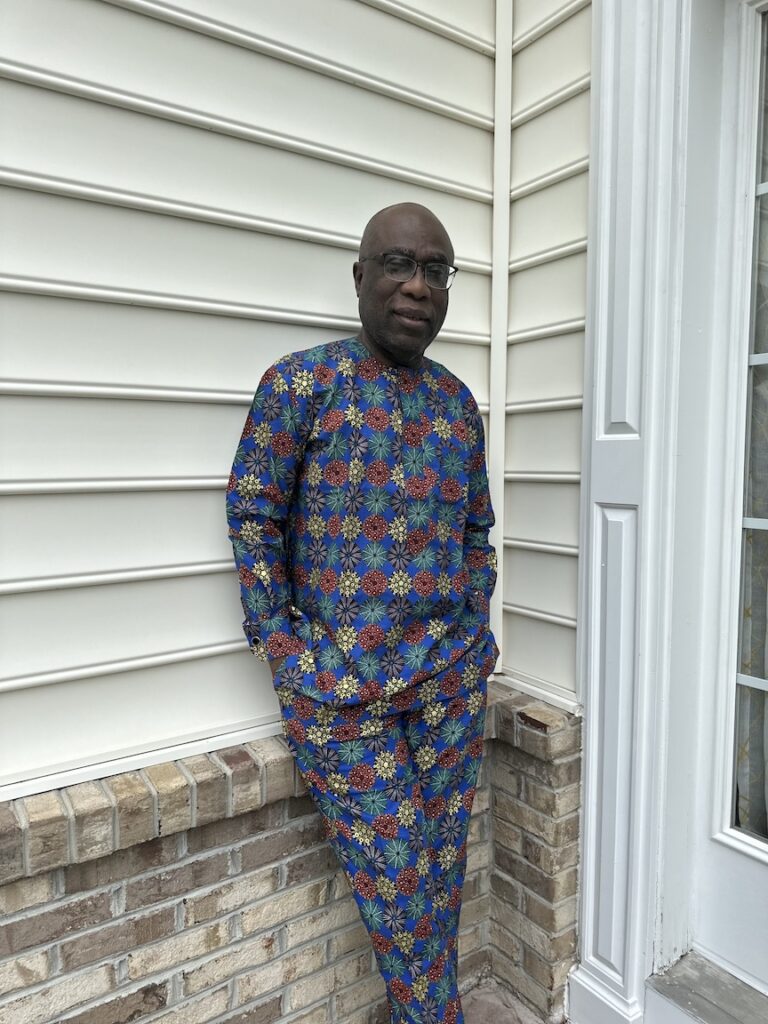
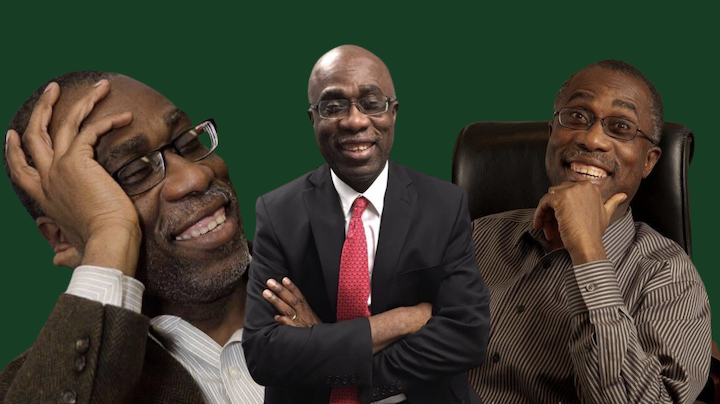
For years, Ikhide Ikheloa had been a lightning rod for literary debate. He reviewed books in long, fiery essays and used literature as a springboard for social commentary. Without publishing a book or being in academia, he became one of the most-read and critical voices on the scene. His bluntness and willingness to pick fights earned him admirers and foes alike.
He chastised Ben Okri for writing gloomy stories about Africa and Chris Abani for painting Nigeria as irredeemably brutal. He praised Teju Cole’s Open City and later excoriated it for borrowing heavily from W.G. Sebald’s Austerlitz. When Sefi Atta called him “a bit of a joke” and said his reviews barely qualified as blogs, Ikhide fired back: “I don’t remember her expressing her appreciation when I fawned all over her book Everything Good Will Come. I live in her head rent-free. We should both go to counselling to sort this out.”
Ikhide’s rise was propelled by the explosion of digital discourse, and on Facebook, Twitter, and his blog, he played critic, griot, and provocateur. By 2017, he was at the zenith of his influence. He had fallen out with figures in the Nigerian literary establishment, people whose political associations, he pointed out, compromised the integrity of the industry. But he had also won an energetic following of younger millennial and Gen Z writers who nicknamed him “Pa Ikhide” and saw him as one of the few defenders of “the conscience of literature,” as well as of non-literary readers pushing back against the encroachment of politics into industries.
“I do not really consider myself a literary critic, at least not in the traditional sense,” he said in our interview. “I am a reader who writes loudly.”
That Ikhide Ikheloa holds his own in the chaos of online discourse may be because his private life is sealed away from art and literature. For 31 years, he worked in the United States public education system, as Ombudsman and chief of staff at the Montgomery County Public Schools in Maryland, a district of 160,000 students. Then he retired. Then he accepted another position as chief of staff to a councilmember and president of the Montgomery County Council, a role he held for five years until the spring of 2024. Then he stopped all work.
Yet even in retirement, Nigeria remains a gravitational force in his life. Could he possibly retire from that struggle for the betterment of the system and industry?
“It’s like a gambling addiction,” he said. “You can’t explain the push and pull of your demons.” Nigeria, as Chinua Achebe has written, is a frustrating place to love. But what keeps him invested are the stories, the food, the music, the “mysterious spirituality” that settles over him whenever he visits. However complicated the politics or painful the disappointments, Nigeria was where his emotional vocabulary was first formed. “It’s still home for me, warts and all.”
He was 23 when he boarded a plane in 1982, bound for an MBA at the University of Mississippi, with plans to make his Ewu parents proud. For his first decade in America, he did little but “work and survive.” Far from home, letters came in lagging. There was no immediate access to the still-new Internet.
His political side awoke after the 1993 Nigerian presidential election. The late M.K.O. Abiola was believed to have won, but the military head of state General Ibrahim Babangida annulled the election. In America, Ikhide found himself drawn into protests organised by the National Democratic Coalition (NADECO). He recalled linking up with academics including Olushola Adeyeye, Debo Akano, and Mobolaji Aluko. Also involved in NADECO were such forces as Wole Soyinka and Beko Kuti. Through the clandestine broadcast station Radio Kudirat and an early online forum called Naijanet, the movement found its digital voice.
“I knew that Abiola was not a perfect man,” Ikhide said, “but the injustice made me willing to protest for him.”
Abiola would die in detention. Nigeria would sink deeper into dictatorship under General Sani Abacha, who would die in office. By 1999, as General Abdulsalami Abubakar prepared the country for democracy, a new permutation was underway in the nascent civilian system. Many members of the pro-democracy movement positioned themselves for public office and positions. Comfortable in his job, Ikhide did not join them.
“I felt some of us should stay outside of government to hold folks accountable,” he explained. “It is a privilege to be able to speak independently without fear, and I don’t take that lightly.”
Then came the Internet boom of the 2000s: emails, blogs, forums, Facebook, Twitter. People were employing them to share opinions. Suddenly, ideas continents apart could be debated in real time. African literature was experiencing a new lease of life as well, and Ikhide, estranged from the arts, stepped into the new online spaces. On Krazitivity, they discussed books. On blogs, he began publishing stories under the pseudonym Nnamdi.
It was 2008 when the journalist Dele Olojede, who three years before had become the first African to win a Pulitzer Prize, launched an ambitious online newspaper called Next. Ikhide joined as a columnist, and, for three years, he produced over 150 essays on literature, politics, and national identity. A young man approached him with an offer to create a personal website, and the result was his blog Xokigbo.com. For years, it hosted some of his most important pieces, helping facilitate the emergence of blogging as an engaging public square for African intellectual conversations.
After Next collapsed in 2011, its archives vanished and writers unpaid, Ikhide responded with a piece titled “What Dele Olojede Owes Us Next.” He praised the paper’s vision and excoriated its founder:
I suppose, one of our weaknesses as a people is to exaggerate the positives in a leader and minimize or gloss over his or her frailties. I am now convinced that the next phase in the struggle for the life and soul of our nation is to hold our intellectual and political elite accountable. They are getting away with murder literally. Without accountability, they have become self-absorbed and tone-deaf to reason.
It was not clear then, but he had set the stage for the literary squabbles of the next decade.
That phase began four years later, with the 2015 Nigerian presidential election, when many of the intelligentsia backed a former military head of state, General Muhammadu Buhari, against President Goodluck Jonathan. Ikhide did not. He saw Buhari as a return to autocracy and couldn’t understand why intellectuals supported him. He lashed out. Friends unfollowed him, acquaintances blocked him, and invitations dried up. In many spaces where he was once welcomed, he was now unwanted.
“I was very angry in those days,” he recalled. “I have no apologies. It got very personal. People called me ‘a dreamer,’ ‘idealistic lunatic.’” He paraphrased another Achebe quote: “‘To be educated is to develop the questioning habit, to be sceptical of easy promises and to use experience creatively.’”
Now, 11 years later, he has a question for all those writers who supported Buhari: Are you proud of what you made this country?
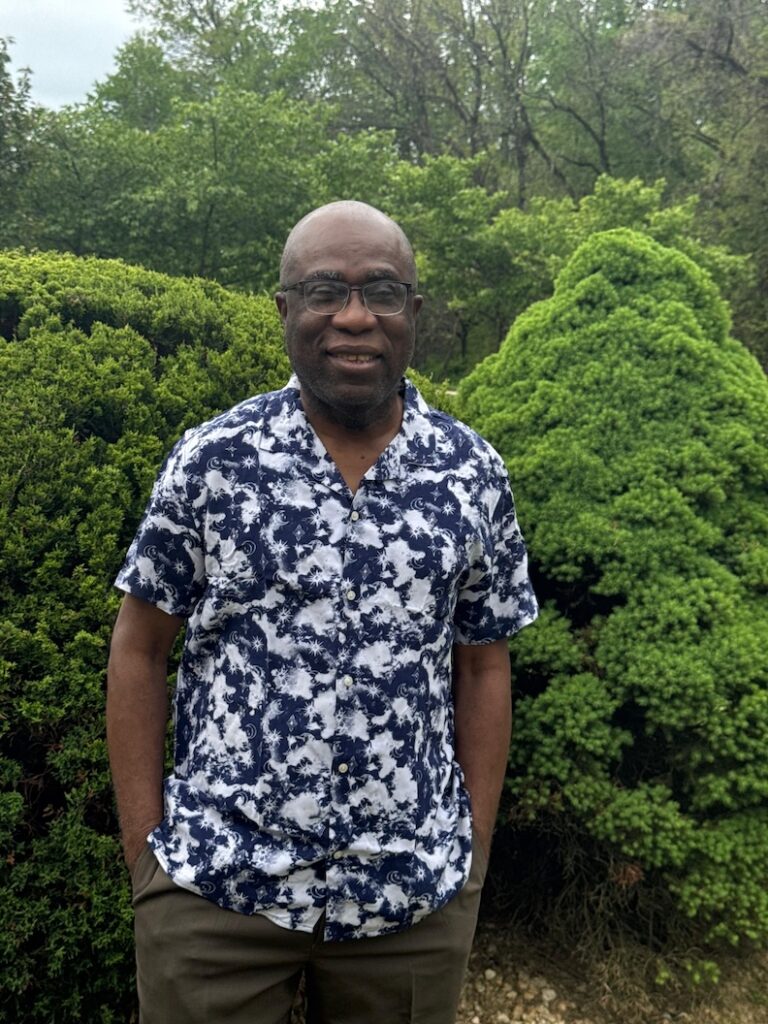
If Ikhide Ikheloa has a philosophy for blunt criticism, it is that power must answer to the people. His social commentary focused on three notions: power, truth, and justice. When he runs amok on the Internet, it is those three filters applying themselves and probing: Who does the story serve? What worldview does it promote? Who gets hurt by it?
He says what many writers are thinking but wouldn’t voice for fear of losing career opportunities. Two years after his boycott of the Kaduna Festival, one of then governor El Rufai’s most vocal critics, a writer and activist named Dadiyata, disappeared. The next month, writers and intellectuals attended the festival again. When he lambasted them for their silence, he was voicing what many saw as a betrayal.
And when his predictions about the El Rufai involvement in literature came true with the Brittle Paper controversy of 2020 — when the blog’s then deputy editor Otosirieze was fired for criticizing the family and rape culture apologism and many young writers pushed back and were blacklisted by the governor’s literary associates — many recalled his words. The moral decay he’d warned of, long dismissed by his critics, was now here. The embarrassment grew when, months later, lawyers rallied and forced the Nigerian Bar Association to withdraw the governor’s invitation to their event on account of his human rights record. What the literary industry would accept, the legal industry would reject. That El Rufai intrusion would redraw the map of Nigerian digital journalism and lead to the launches of People’s Gazette, by former Premium Times reporter Samuel Ogundipe, and Open Country Mag, by Otosirieze, later that year. (This year, with El Rufai out of political favour, the Nigerian DSS reopened the Dadiyata cold case.)
Does he think that moment deepened the Nigerian public’s distrust of writers?
“I wouldn’t say the episode damaged the public perceptions of writers,” Ikhide wrote in an email. “Many writers joined me at the time to call out El Rufai and the writers who chose to cavort with him. I will respect them to my dying day.”
That episode, however, expanded his reprehensions to a new frontier: online publications. The controversy around Enkare Review, a Kenyan magazine of remarkable promise, whose website was deleted following internal contention, triggered his trauma from losing his 150 essays when Next shut down without a warning. When the offending editor Troy Onyango later founded Lolwe and appeared in a New York Times feature on African magazines, Ikhide called it “a list of Western-funded ‘African literary journals,’ rags, that to be honest, don’t reflect true African narrative.”
This time, there was pushback from his base of young writers.
“Funded by which west? People are trying, doing their best from private funds,” replied the editor Kenechi Uzor. The critic Jerry Chiemeke wrote: “Tarring all the mags with one brush is very dismissive. . . a good number of them are not ‘Western-funded.’”
Ikhide told me that literary platforms are not merely “websites”; they are repositories of collective memory. When those archives disappear, a part of the cultural record disappears with them. The word “rag,” he said, though blunt, came from an older academic usage familiar to him from student life, where campus magazines were often referred to casually as “rags.” His intention, he added, was not condescension. “My job is not to be patronizing but to push for excellence.”
Last year, he was back punching at the establishment. His focus was a long-vilified factor in Nigerian literature: the Nigeria Liquefied Natural Gas (NLNG) Prize for Literature, which, at $100,000, is the biggest prize in the continent. “The NLNG Prize for literature disenfranchises young Nigerian writers,” he had written in a 2017 post on Medium. Then last October, he wrote on Substack and on X:
I call on the Nigerian government and stakeholders to discontinue the NLNG prize for literature and use the funds thus saved on productive literary initiatives on behalf of Nigerian writers. I estimate that since the inception of the prize, the NLNG has wasted over $20 million just to administer what amounts to a lottery for who can hustle the most. We should be rewarding and sustaining writers, especially young ones. This prize needs to be suspended until we can figure out how best to use what is really a lot of money.
The problem was the misused extravagance and misguided structure of the prize, he explained. After 20 years of annual celebration, he could not “even remember three people who won it.” Winning is not the same as impact, and he is against rewarding labour in a way that creates celebrity rather than circulation. Had the $20 million spent over two decades been directed to readership development, library support, or book access for young Nigerians, “the life and soul” of literature might have looked different today.
Instead, he notes, this lack of institutional thought has fed a larger anxiety that writers, eager for validation from prizes, have begun to “write to the test,” afraid to offend potential jurors, sponsors, publishers, or cultural gatekeepers. The outcome is “a community of Nigerian writers turned into mousy adherents of the status quo, afraid to tap into their moral conscience.”
The public’s impatience for this is why the best stories, he argues, exist online. “The new publishing is hiding in plain sight,” he said. “It’s called social media.” Traditional publishing, he has been saying for over a decade now, is dying, and a new digital ecosystem is emerging.
Is this be why he hasn’t written a book?
“I call my attitude (refusal to publish a book) a political decision,” he replied via email. “I wanted to write free to young people. I did not want to hide behind expensive books and paywalls to say what little I have to say. I have been successful at it.”
Ikhide is aware of the labels that his resistance to establishment culture has earned him — depending on who you ask, he is either a disruptive presence who enjoys empty antagonism or a fearless voice who saved literary commentary from cowardice.
On the video call, he shrugged. “It’s all good. People take me too seriously and let me live rent free in their heads.” Literature, after all, is not his primary identity. “This thing I do,” he said, almost dismissively, “is just a side show that comes bleating out of my iPhone when I am bored.” ♦
If you love what you just read, please consider making a PayPal donation to enable us to publish more like it.
More In-depth Stories from Open Country Mag
— Chimamanda Ngozi Adichie Is in a Different Place Now
— How Teju Cole Opened a New Path in African Literature
— Maaza Mengiste‘s Chronicles of Ethiopia
— How Tsitsi Dangarembga, with Her Trilogy of Zimbabwe, Overcame
— In a Time of Fire, Chuma Nwokolo Protects His Purpose
— The Creed of Cardinal Arinze
— How Leila Aboulela Reclaimed the Heroines of Sudan
— How Rita Dominic Became Nollywood’s Most Acclaimed Actor
— Ikenna Okeh‘s Quest for Authenticity
— Chude Jideonwo‘s Stage of Nigerian Dreams
— Chinelo Okparanta, Gentle Defier
— The Next Generation of African Literature
— The Methods of Damon Galgut
— How uHlanga Press Disrupted South African Poetry