

It has become clichéd, in Nigerian literature, to issue public disavowals of the role of cultural informants for Western audiences. In her famous 2009 TED Talk, “The Danger of a Single Story,” Chimamanda Ngozi Adichie critiques, among other notions, the expectation that African writers explain their culture rather than explore universal themes. In 2012, Teju Cole echoed this sentiment in his essay “The White-Savior Industrial Complex.” In 2014, Ben Okri called it “mental tyranny” and proclaimed: “We have to seize the freedom to be what we can be, to write whatever we want, with all the mystery and fire of art. It is our responsibility to illuminate the strange corners of what it is to be human.” In 2023, Ayobami Adebayo gave it her own twist and used the term that is of interest to this piece: anthropology.
One wonders why Nigerian writers keep making implicating statements and offering hollow challenges to the Western reader’s perception of them and their work. These proclamations are vain, if not conceited, since their works of realism do not exhibit the radical creative freedom worthy of such denunciations; they still produce books that are firmly in the Achebean tradition. Besides, society has transformed and spaces have opened for other voices who are not professional writers to fill. The novelist who holds, sometimes authoritative, opinions across history, anthropology, politics, and culture has disappeared. The tight spaces they once occupied have expanded to allow new areas of expertise. Academic specialization means that proficiency is now compartmentalized. Social media and global connectivity have democratized who gets to present “the African experience.” When people seek insight into our cultures, they know to seek scholarly credibility. They can access specialized scholarship that’s far more sophisticated than what any novelist, no matter their talent or resources, can provide through fiction. No writer who claims to be practising anthropology in our time can be taken seriously, unless they are actual experts in the field.
The problem isn’t simply the shrunken role of Nigerian writers today. The old paradigm of African writers being “revolutionaries” and “teachers” has been abandoned — and rightly so. Literature has become for its practitioners just another career, with rites of awards, book deals, travels, readings, and sales — and, perhaps, rightly so. The problem is that these same writers desire to be accorded similar moral gravitas as Achebe and his generation. They wish, on the one hand, to be free of the responsibility of the oracle, but on the other hand, they ache to inherit that reverence. One cannot have both without earning them.
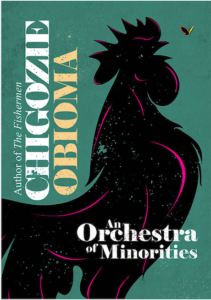
But even as some writers seek exemption from societal expertise, Chigozie Obioma is an exception. Unlike his peers, he has not, to the best of my research, publicly renounced the role of the anthropologist. His interviews following his second novel An Orchestra of Minorities suggest that he embraces it. He told The Republic that he:
attempted to draw the map of the Igbo civilization, mapping in landmark events like the first encounter with the Portuguese in the sixteenth century, slavery (through the slave the chi ensouls in Virginia in the eighteenth century), the British colonial period, the Biafran war, and the present time . . . .
He encourages the notion in multiple interviews that, with this novel, he is doing the work of a historian, an archivist, an anthropologist. To BOMB Magazine, he said:
I wanted the narrator of this story to transcend time and be able to tell the story wholly, while also being a chronicler and teacher of history and the civilization of the Igbo people.
Any casual reader of Adiele Afigbo’s Ropes of Sand, an attempt by a professional historian to reconstruct the history of the Igbo people, knows that Obioma’s “history” cannot be taken seriously. His attempt at mapping Igbo cosmology is problematic. (He admits that much to it is contested and that he’s only using an approximation.) It is a precarious position at a time when the academy has moved far beyond such generalist cultural interpretation. That he has made these claims to ethnography without adoption or rebuttal from academic experts reveals something telling: that scholars no longer see novelists as participants in their conversations. It is one thing to use history as background for literary work, which is a legitimate endeavour. It is another to frame historical fiction as archival or historiographical. The latter invites comparison with actual historians, and in that context, the claims collapse.
The fissures go deeper. Obioma’s obsession with “accuracy” in depicting Igbo mythology misses the entire point: mythology is not archaeology: mythology is a living system of meaning-making that must be constantly reinterpreted to confront each generation’s existential situation. The question is not whether he gets the symbols right, since there is no orthodoxy upon which claims of “accuracy” can be tested. The question is why he does not frame his relationship with mythology as simple “usage.” The injudicious posture of “accuracy” places him in the logic of ethnography, where he has no expertise. To ask what new meanings might be wrested from myths, to inquire if wresting new meanings is even possible, to wonder if their lack of meaning demands the perpetration of creative violence — that is to begin the process of mythopoesis.
Unfortunately, Obioma is so deep in imitating a role long rendered obsolete by history that he does not venture in that direction.
It is the spirit of a time that summons its prophets to participate in its birth pangs. Achebe and his generation were anthropologists not by arrogation but by accident. Their historical position as midwives and visionary intermediaries between two worlds — one dying, one struggling to be born — required ethnography. While a few, like Christopher Okigbo, were wary of this pressure of commitment — even as it ironically has been used in explaining Okigbo’s participation and death in the Biafran War — others utilized it. Achebe went further and made this epochal role an imperative for the “African writer” against the “writer from Europe.” This, unfortunately, was an antidote only for its time.
Achebe could classify Things Fall Apart as a “very gentle re-creation of the past” because he imbued his work with a significance that was only permissible in his time, to writers producing volumes of thought with scant supporting resources. When he wrote it in the 1950s, there weren’t many alternative sources for understanding African societies and worldviews. “African” anthropologists and historians were still largely European, and their work was often compromised by colonial assumptions. Achebe, who studied English, History, and Religion at Ibadan and worked variously as a writer, broadcast journalist, and diplomat, had to be a generalist because many of those spaces were still narrow in their Africanness.
The inevitable proliferation of scholarly expertise made the corrective role that Achebe assigned to literature redundant. Yet Achebe’s context and authority had already lent itself to decades-long misinterpretation, and essentially locked African writers into an instructional role.
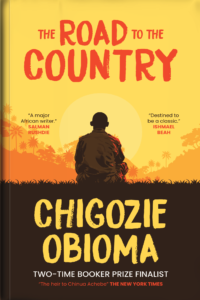
One gets the sense that Obioma’s vision in his most recent novel, The Road to the Country, is behind the times by at least a decade. He has produced a brilliant novel about a Biafra that no longer exists, a book that also does not anticipate its future. This is a hard assessment, because, with the disruptive work of Nnamdi Kanu, Biafra has been transformed from a historical event into a proleptic consciousness.
The old iconography of Biafran children with protruding bellies has long been superseded by images of Kanu shouting in court, or loudly challenging, on Radio Biafra, the fragile myths upon which Nigeria was established. In the words of Mary Daly: “The words of the Fates are fetched from remote times and places as well as from the innermost depths of the here and now.” The Fates of Biafra no longer turn to 1967 to fetch their prophetic words; they fetch it instead from the here and now — from the crumbling of the Nigerian experiment and from our inability to visualize an alternative.
The contemporary meaning of Biafra has been permanently transformed from a closed tragic event to a perpetually open question about the fate of a people, one that is posed in different ways across the history of Igbo people, in or out of Nigeria. That is its raw existential power. Adichie, whose own novel on the war, Half of a Yellow Sun, predated Obioma’s by almost two decades, recognized this when she told this magazine in 2021: “I think that Biafra for this new movement is kind of an iconic thing they call upon, but the goal is to get somewhere in the future.” But for all his anthropological wandering, this shift, this prophetic generalism that would have given him his Achebean standing, escaped Obioma.
One must understand that our modern African condition is marked by radical doubt. It is not mere youthful cynicism but despair in the face of exhausted and lifeless symbols. It is depression, as defined by Rollo May in The Meaning of Anxiety: the “inability to visualize a future.” We live in a moment in history with no bearing towards the future. And like displaced people fleeing the ruins of our home, we have become cosmopolitans and drifters, unsure of what we are and ought to be. We have no myths to rouse us to new adventures and to help us chart courses for our tomorrow.
Politically, this cry for myths has incentivised, among other recrudescent philosophies, an Nkrumahism, where the world is divided into the Imperial Western Core, the source of all of Africa’s problems, and the Global South allied with Russia and China, two selfless and disinterested partners handing Africa freebies while the Imperial Core takes what it can. In this puerile attempt at mythmaking, North Korea is a bulwark against imperialism and not a brutal dictatorship; democracy is a “Western construct” and Nigeria needs the return of a strongman, like Captain Ibrahim Traore of Burkina Faso. Whatever one thinks of this un-critical diagnosis, it points to a psychic event that is peculiar to our time. Yet these modern myths, while taking the Nigerian depression seriously, are only channels of resentment. They offer no vision of transformation; they only frame our fate in terms of victimhood and simple salvation.
Obioma’s error in An Orchestra of Minorities, if it can be called an error, is not the ambitious attempt at curating “history” but a rhetorical insistence that cultural symbols are static and “authentic” rather than plastic and oracular. The symbols of Igbo ontology — including the chi, which is of interest to him — are not containers of fixed meaning. They are dream-images, made to be wrestled with, like Jacob with the angel. To read or write them today is to do violence to them and be violated in turn — to open oneself up to their future and unrevealed meanings, to the prophetic word they speak into the here and now. Perhaps this analysis applies more to Biafra than to the Igbo pantheon, considering the unresolved trauma and existential urgency of the former.
The Biafra of the here and now summons us not to the past but as a modern-day Delphi, an oracle lying at the farthest frontiers of society whither we sojourn on pilgrimage, often with hasty steps and frantic lips, to whisper again the question, What are we and what ought we to be?, into the void’s indifferent ear, in anticipation of the echo of I am or I ought to be, and with which we can hasten back to society, affront the powers of fate, attain prophetic ecstasies, perform on ourselves a psychic cleansing for the wounds of history, and reassure ourselves that we are not forgotten — that a place in the future of mankind is reserved for us. Biafra has ceased to become a tomb laid over the aspirations of a people, but a structure of historical feeling. For the oracle, as Heraclitus divined of that at Delphi, neither speaks nor reveals, but riddles the supplicant with acrimonious ironies and proverbs, and plays upon his intuition a metaphysical hide-and-seek to provoke him into drawing out the insight from within himself.
To draw out oracular insight demands a monumental capacity for remembering, as well as for venturing beyond, and perpetrating a metaphysical violence on memory itself. For if one does not perceive that the foundations of society are being shaken, if the illusion of continuity and perpetuity persists against the tectonic shifts heralding a volcanic eruption, then others might as well venture the shaking of those foundations. Not out of the puerile nihilism of the intellectual rebel who holds all things in egoistic contempt, but to see what new possibilities might emerge from their ruins. Thus, the inability to perceive the shifting of the tectonic plates can no longer be taken as an excuse. For the prophetic is always here, always calling forth the end, always discrediting the false prophets who promise that a new future is possible without a violent destruction of the old, inviting us to undertake the creative destruction that clears the ground for the erection of a new mythos.
Biafra has become the self-affirmation of a restless people for whom the past is beyond recovery, who know they are capable of a higher synthesis and for whom the horizon of what is possible has been extended infinitely. That restlessness feeds, for example, the Igbo myth of Hebraic origins, which is merely the originary fallacy of a late, backwards people who are both aware and anxious over their lack of a historical place of their own. Synchronism and autochthony have been proffered as solutions by those who pathologize these anxieties and see them as symptoms to be treated away. But these anxieties are beyond any easy or comfortable resolutions and must be seen as what perpetually drives a people to consciously destroy their realized forms in search of new and higher forms. It is these restless strivings that made Biafra endurable and sustain Igbo people to this day.
Obioma missed that in another interview in 2019, in which he mourns the loss of Igbo cosmology and cites Saudi Arabia as a culture that has remained unchanged across centuries. Such romanticism betrays a fundamental misunderstanding of cultural dynamism. The true tragedy of Igbo history is not its loss of continuity to the intrusion of colonialism, but its inability to transcend its own origins. Its tragedy is not colonization, but stagnation. This is a harder and more controversial thing to say, and yet it is the intellectually honest and historically aware assessment. It is a culture that resisted its dialectical disintegration over centuries and thus failed to attain a higher synthesis.
The prophetic spirit of a doom time does not exist in Igbo cosmology as it were. There were no voices summoning us to the end, inviting floods that clear the grounds for a new beginning. We have no visions of our death and return. No challenges to our idolatry of the temporary. On the contrary, in the West — and this does not minimize Western colonial theft of other cultures’ resources and ideas — there is no absolute rest, only an endless motion towards ever-receding horizons of higher forms and the embrace of disintegration as a precondition for renewal. This, Oswald Spengler claims, is the great prophetic heritage of the neurotic West.
That some cultures maintain coherence across time — if at all one can make the argument — is not because they are stronger or superior; it is because they are insulated from this propulsive necessity of self-transcendence that is foundational to the West’s historical consciousness and, perhaps, to all truly ineluctable civilizations.
And this prophetic spirit is what has infected Biafra. It has ceased to be a grievance inviting pathos or resentment — or, in the case of The Road to the Country, an object lesson on the futility of war, a lesson which does not hold for the victorious and which cannot persuade human nature against indulging in wars — but grounds for the articulation of new meanings, new aspirations, new struggles towards historicality.
It is growing in the wider Nigerian context. And so far, our published writers have not proven themselves to be participants in this psychic event.
It is nothing short of a tragedy that most published Nigerian writers have no view of the spiritual struggles of our time. They produce not new vistas of possibility but analyses. Some of the writers bridging the so-called Second and Third Generations — including Okey Ndibe, Niyi Osundare, Femi Osofisan, and Tanure Ojaide — elaborate the paradigm of the intellectual-hierophant whose grand pronouncements speak truth to power, who raises moral outrage, in the faith that power structures are susceptible to shame and capable of hearing. But the Nigerian political machine is a self-perpetuating system of accumulation insulated from intellectual critique. Its currency is not reason or morality but power and money. So the writers who speak do so while knowing that their attacks are powerless against the hardened, cynical nature of the Nigerian state.
Many of the writers who followed and are formally celebrated as the Third Generation, perhaps sensing the futility of being oracles, shifted in their writing from direct political critique to more cosmopolitan, identity-focused narratives, christening themselves Afropolitans. In doing so, they severed themselves from the metaphysical struggles of ordinary Nigerians, physically and spiritually. Physically, because they live or keep access to better-envisioned societies and developed a register digestible for a global audience and not in the idiom of the search at home. Spiritually, because they produce exilic work, often about Nigeria but increasingly less for Nigerians. Some did not even need to live abroad to be severed from the struggle. Even as he approaches dusk, Wole Soyinka, for example, still gives interviews that betray his incompetence as a political analyst. He criticizes Donald Trump, a foreign leader, but not Bola Ahmed Tinubu, the domestic leader whose government has dealt the worst hand on Nigerians.
Without political capital, writers are like the rest of us, spectators, unable to change much, if anything. But the spectator, as Nietzsche saw, is divine. If one is fated to be a spectator, then one must become a divine spectator. The blind spot of this intellectual-hierophant paradigm is that what we need is not analysis but mythos, and only with mythos can we live.
Here, we must invoke Nigerian literature’s greatest blind spot: Christianity. The relentless flat attacks on Nigerian Christianity — Islam is a more protected religion — by “cultured intellectuals” misunderstand the mass appeal of religion in meaning-making. It offers what Nigerian artists, as a whole, fail to, which is: provide a metaphysical framework for enduring the unendurable, a way to live through an unending national tragedy. Christianity, with its hope, promise of community, and explanation for suffering, is more immediate and comforting than the bleak, hopeless narrative of the intellectual who often stands outside the system, critiquing it, while failing to see that those inside the system are not looking for critique but for meaning. By providing such mythos, religion became the most powerful cultural force in Nigeria — and our greatest export after the crude oil.
These attacks may be as much the product of barely concealed envy, an inadvertent acknowledgement of religion’s power and influence, and ignorance of its meaning, as it is about negative personal experiences within its structure. Still, those who mock it and wish to wrest it away from millions of Nigerians are unable to provide an alternative that can match its power. Instead, while they speak, and aspire to speak, to niche Western readers in New York and London, Christian ministers filled that gap of meaning for Nigerian listeners. Their literature has lost its existential urgency not because they don’t produce good writing, but because, unlike the pastors, they are no longer priests that bring down fire from the mountain.
We are living in penultimate times, with the end at hand. This epoch is already minting its seers from those possessed of infinite faculties for seeing and abiding. It is inviting diviners and speculative minds who can grant us a peek into the future. It is asking that we use everything at our disposal — I see no shame in claiming Greek philosophy and the entirety of the Western tradition as part of my intellectual heritage, especially in cases where there are no choice local analogues — as tools to intuit our own fate. A new abyss has opened up and is inviting us to wrestle with it, to challenge the old certainties and to utter into the void new words — to become the forth-tellers of a new world seeking purchase to break forth into our collective consciousness.
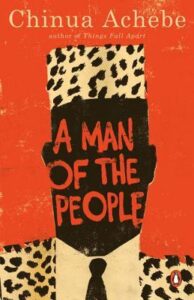
This is why I insist that our Nigerian depression is not a curse; it is a blessing. In some thinkers, it has produced the impulse to seek that which lies beyond the self-evident. Their doubts and despair have made them not curators of lifeless cultural symbols or the mouthpieces of old grievances but their destroyers, their resurrectors, their alchemists. They have buried what cannot speak anew and have bled into language what can. The genius of our era is she or he who waits, invents, destroys, descries — the progenitor par excellence. It is she or he who can muster the chutzpah to see, as Achebe did when he ended A Man of the People with a military coup, and in the second week of 1966, just before the book’s publication, the five majors struck and Nigerian history changed.
For those of us who experience this perennial cry for a new myth, for prophecy that can dispel the cloud of depression overhanging a generation — for those who once sought the convenience or authority of the writer who aspires to anthropology — it is clear that most of our writers who have published books so far have no such prophetic sensibilities. Most of them have their flagpoles planted in a disappearing world, and they don’t know it yet. They miss the subtle signs announcing the emergence of disintegrative conditions that once made such careers consequential beyond literature. They, who might have offered a more enduring mythos, abandoned the task and left the imaginative field open for politicians and hucksters. They focus on just building careers. In their absence, the cry for myth has been debased and shrunken into hollow performances that exploit our shared despair rather than transmute it.
The point is not whether Obioma, or others who seek it, has the range to deliver an Achebean moment. The point is that he sees himself as participating in its continuum and not as a rupture in it. He mistakes being a generalist as the source of Achebe’s iconic stature, when it was Achebe’s participation in the most important spiritual events of his time. One senses that Obioma is not privy to the larger shift in national consciousness, much less a participant in it. One perceives an easy satisfaction, perhaps even the triumph of a man who has realized a “destiny.” That would be more than enough for a writer who presents as only a conjurer of imagination, but not for one who attempts to function as historian, archivist, or anthropologist.
The problem is broader. In my studies of Nigerian literature, from its protest poetry traditions to ecocriticism, it is clear to me that our intellectuals have only a few frameworks through which they can interpret social and psychic phenomena — Marxism, Fanonism, postcolonial theory. Vistas that would allow them to look at the world afresh are closed to them. They all bow down before the same gods and, in turn, produce similar and uninspired visions of society.
Perhaps this is the real culprit, and not necessarily their position in lived time. Perhaps the first role of a modern intellectual is to rend the veil that others us, and wander far away from all that has the appearance of “home” in search of new anchors. And to do so without the usual postcolonial anxiety about authenticity but as an act of self-affirmation and courage. For these questions we pose today have been posed in other places long ago. Perhaps we are only waiting for the unpublished writer who will answer us.
If serious realist fiction must be done, it must be done in the face of and against the force of despair, or not at all. But there is no metaphysical provocation in the imagination of most Nigerian writers, and thus, they sleep on in our Garden of Gethsemane, while others, unheralded, despised, and persecuted, travail over the rebirth of the world. ♦
If you love what you just read, please consider making a PayPal donation to enable us to publish more like it.
More Essays & Book Excerpts from Open Country Mag
— OCM Presents: Essays from The Sabi Prize for Critical Reading and Writing
— Between Starshine and Clay, by Sarah Ladipo Manyika
— River Spirit, by Leila Aboulela
— Black and Female, by Tsitsi Dangarembga
— Disability and the Grammar of Presence in Versus Versus, by Iheoma Uzomba
— Introduction to the 60 Notable Books of 2025, by Tolu Daniel
— The Ahistorical Racial Polemic of Conclave, by Otosirieze
— Thinking Through Tremor, by Reyumeh Ejue
— “Our Literature Has Died Again”: Nigerian Writing in the Era of the Nomadists, by Kanyinsola Olorunnisola
— The Nigerian Oppression, as Chinua Achebe Would See It, by Emmanuel Esomnofu
— The Quality of Mercy, by Siphiwe Gloria Ndlovu
— We Once Belonged to the Sea, by Diriye Osman
— Biracial Britain: A Different Way of Looking at Race, by Remi Adekoya
— The Fugitives, by Jamal Mahjoub