In the watchful world of the Nigerian poet and nutritionist, the arts and sciences unite in emotions. His debut collection, Winged Witnesses, is a dark observation of illness and death, in their ordinariness.
The Nigerian poet did not necessarily plan for his first full-length collection, The Years of Blood, to confront his boyhood in a stark way. But the layers of memory and spirituality it unpeels go back to the Yoruba verses of his direct ancestors.
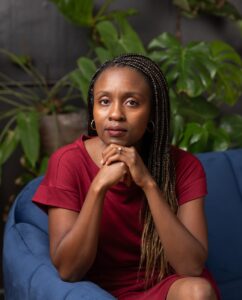
The Open Country Mag cover star is now the third African writer and second Ethiopian to receive the grant, after Chimamanda Ngozi Adichie and Dinaw Mengestu. She gets $800,000.
The advocating writers, including Tsitsi Dangarembga, J.M. Coetzee, Olga Tokarczuk, Ben Okri, Yann Martel, Rohinton Mistry, Anthony Doerr, Colm Tóibín, and Kamila Shamsie, signed an open letter to President Isaias Afwerki of Eritrea.
Founded by Chukwuka Odigbo and Dawn Chinagorom-Abiakalam, and judged by Adachioma Ezeano and Esther Ifesinachi Okonkwo, the ₦2.95 million ($2,165) Sabi Prize for Critical Reading and Writing “hopes to inspire young Nigerians everywhere.” Open Country Mag has published the winning essays.
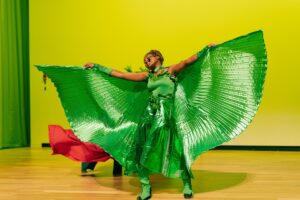
A month after her production Pretty Dangerous: Four Acts on Womanhood wrapped in Canada, the Nigerian artist took home African poetry’s top honour. Her practice is “a way of holding those in-betweens,” she said.
The Gbagyi are an ethnic minority in Nigeria’s vastly diverse Northern Central region, with scant representation in mainstream arts and literature. With Before the Mango Ripens, a historical novel set during a 1970s Christian tussle, an emigrant daughter shares an untold chapter.
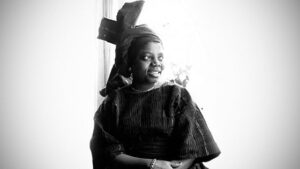
The Nigerian social critic riled up online controversies through blunt, unsparing commentary on African literature, politics, and establishment culture. His style has been criticized as abrasive, dismissive, and even unfair. But, in his persistent alarm, he foresaw a moral decay.
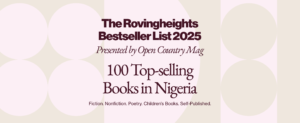
Releasing the fourth annual compilation of the only bestseller list in Nigerian literature: comprising the Top 100 books of the year, alongside the Top 50 in fiction, nonfiction, poetry, self-published, and children’s books.
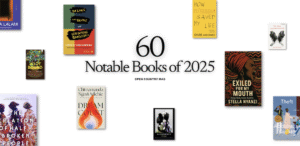
From Chimamanda Ngozi Adichie, Abdulrazak Gurnah, and Stella Nyanzi to Alain Mabanckou, Siphiwe Ndlovu, and Laila Lalami: the notable African books of 2025, guest curated by the literary culture critic Tolu Daniel.
The great writer, street photographer, and art historian’s enquiries lured him onto a solo path in contemporary literature—a completely new terrain for an African writer. Ten years after his debut novel, Open City, he still seeks artistic freedom.
In the first longform profile of him in an online African publication, we follow the great writer’s reinventive journey in fiction, nonfiction, and photography, to mark the 10th anniversary of his debut novel Open City.
The central African country’s two politico-cultural systems clashed from the beginning. But in the last 10 years, literary production increased and a conscious community formed, and at the heart of it is Bakwa Magazine.
The Kenya-based magazine’s latest, featuring fiction, poetry, essays, and photography by 18 contributors, is guest-edited by the Ghanaian writer Elfreda Tetteh and the Trinidadian writer Akhim Alexis, and illustrated by the Nigerian artist Moje Ikpeme.
We are hosting events, podcasts, and readings in Yaounde, London, and Berlin. Consolidated and recomposed back issues (1-8) will be available for free, and issues 9-10 for sale in physical and eBook formats.
The piece, “It Is Obscene,” calls out two former students, one being the novelist Akwaeke Emezi, who “publicly insulted” her, “sent emails and texts that were ignored,” and “decided to go on social media to peddle falsehoods.”
“An ambitious new magazine committed to African literature”
— Chimamanda Ngozi Adichie
Join 25,000+ subscribers to essential, in-depth stories in African literature, Nigerian film, & culture: inspiring Profiles, incisive reviews, thought-provoking features & conversations that happen nowhere else. It's premium access to the visions of changemakers, from icons to emerging voices. Plus key industry stories from Folio Nigeria by CNN.
We respect your privacy and will never send you Spam or sell your email.